
Hardened Dog: Meaning, Common Causes, Warning Signs, Behavior, and How to Help Your Dog
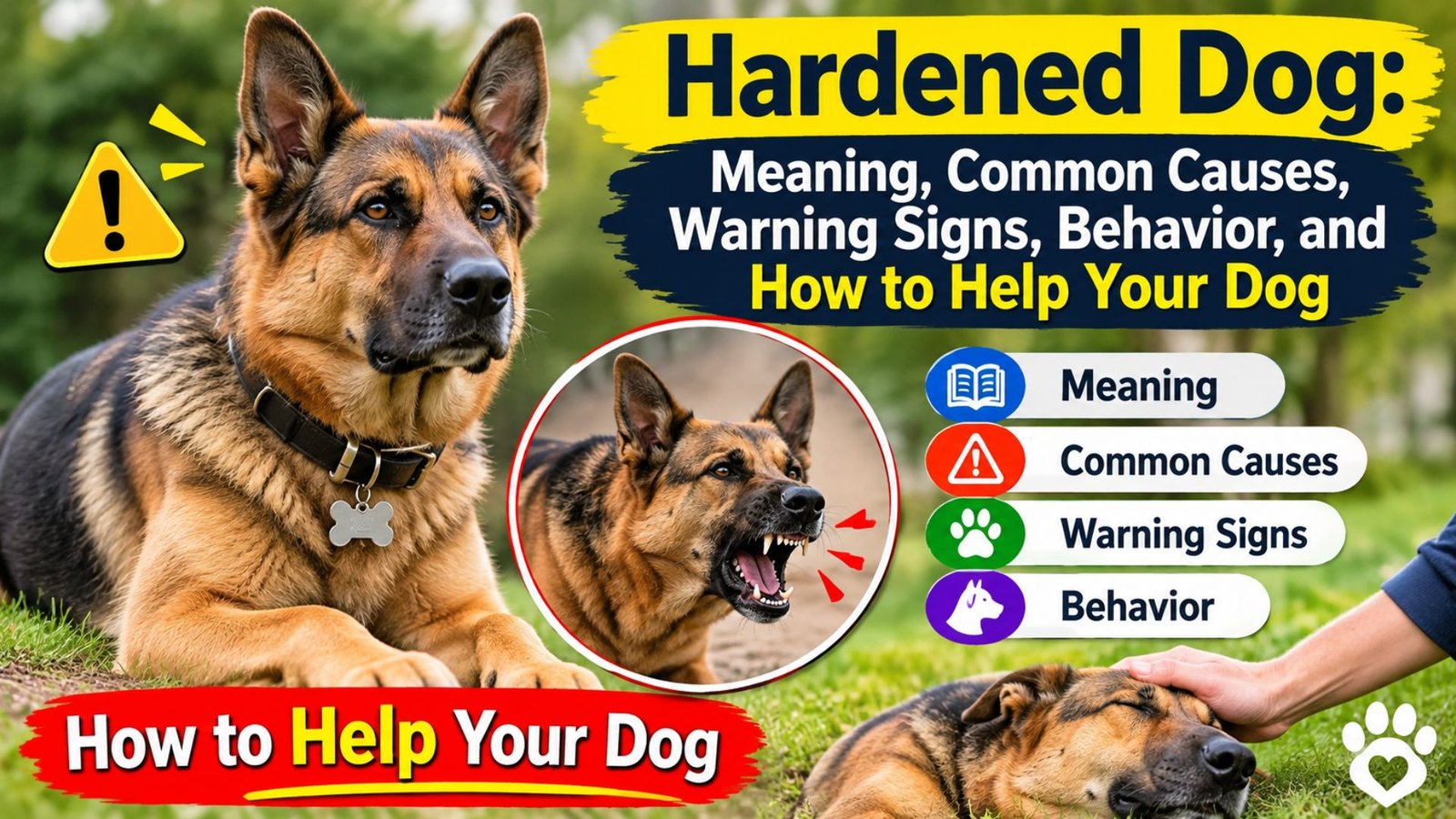
A hardened dog is generally a dog that has developed a guarded, defensive, emotionally distant, or unusually tough attitude because of its experiences, environment, or temperament. The term can describe a dog that struggles to trust people, reacts defensively to unfamiliar situations, avoids affection, or finds it difficult to form close relationships.
However, being a hardened dog does not automatically mean a dog is aggressive or dangerous. Some dogs appear emotionally tough because they have experienced neglect, abuse, poor socialization, frightening situations, or inconsistent handling. Others are naturally independent, cautious, or confident.
Understanding why a dog behaves this way is the first step toward helping it feel safe. With patience, positive reinforcement, appropriate training, and a supportive environment, many dogs can gradually develop healthier relationships with people.
In this guide, we will explore what a hardened dog means, why this behavior develops, the warning signs to recognize, and practical ways to help a dog build trust and confidence.
What Does Hardened Dog Mean?
The phrase “hardened dog” is an informal description rather than a recognized veterinary or behavioral diagnosis. It usually refers to a dog that seems emotionally guarded, defensive, less trusting, or difficult to approach.
A hardened dog may have learned to protect itself because previous experiences taught it that certain people, situations, or environments are unpredictable or frightening.
For example, a dog that has experienced repeated rough handling might become uncomfortable when someone reaches toward its head. Another dog that has spent much of its life without positive human interaction may avoid strangers or remain distant even when someone tries to show affection.
ALSO READ:Masculine Dogs: Traits, Breeds, Appearance, Personality, and Care Guide
The word hardened can describe several different characteristics:
Emotional hardness: The dog appears distant, withdrawn, or less responsive to affection and attention.
Defensive behavior: The dog growls, barks, hides, or reacts strongly when it feels threatened.
Reduced trust: The dog struggles to feel comfortable around unfamiliar people or other animals.
Physical toughness: Sometimes people use hardened to describe a physically strong, muscular, or resilient dog. This is different from emotional or behavioral hardening.
Learned independence: Some dogs become highly self-reliant and prefer limited interaction with people.
It is important to understand the difference between a dog’s personality and behavior developed through negative experiences. A naturally independent dog does not necessarily have emotional difficulties.
Why Do Dogs Become Hardened?
Dogs do not all respond to difficult experiences in the same way. Some become fearful, others withdraw, and some develop defensive behaviors.
Several factors may contribute to what people describe as hardened behavior.
1. Poor Early Socialization
Early social experiences help puppies become comfortable with people, animals, sounds, and everyday environments.
When puppies have limited positive exposure to the world, they may struggle with unfamiliar situations later in life.
For example, a dog that rarely meets visitors during puppyhood might become uncomfortable when strangers enter its home.
Poor socialization does not guarantee that a dog will develop behavioral problems, but it can make certain situations more challenging.
2. Neglect and Lack of Attention
Dogs need appropriate care, companionship, exercise, and mental stimulation.
A dog that experiences prolonged neglect may become withdrawn or develop difficulty trusting people.
For instance, a dog that spends most of its life isolated without meaningful interaction may not understand how to respond comfortably to affection or attention.
Some neglected dogs become unusually quiet, while others display frustration or defensive reactions.
3. Previous Trauma or Abuse
Past frightening experiences can influence how a dog responds to people and its surroundings.
A dog that has experienced physical punishment, abandonment, repeated intimidation, or frightening encounters may associate certain situations with danger.
Common examples include:
- Flinching when someone raises a hand.
- Avoiding people wearing similar clothing to someone associated with a frightening experience.
- Becoming uncomfortable when approached suddenly.
- Hiding when hearing loud voices.
- Reacting defensively when someone tries to touch sensitive areas.
These behaviors may indicate fear or stress rather than a naturally tough personality.
4. Harsh or Punishment-Based Training
Training methods based on intimidation, physical punishment, or repeated corrections can damage a dog’s confidence.
When a dog is regularly punished for communicating discomfort, it may become more anxious or defensive.
For example, punishing a dog for growling does not necessarily remove the fear behind the growl. It may simply teach the dog to stop giving an obvious warning.
Reward-based training is generally a safer and more effective approach to teaching desirable behavior while maintaining trust.
5. Fear and Unpredictable Environments
Dogs feel more comfortable when their surroundings are predictable.
Frequent changes, loud noises, overcrowding, threatening interactions, and inconsistent handling can increase stress.
A dog living in an unpredictable environment may become watchful and defensive because it does not know what will happen next.
6. Limited Positive Human Interaction
Dogs that have little experience with gentle, respectful human interaction may struggle to understand people’s intentions.
This is particularly common in some rescue dogs and dogs that have spent long periods without stable companionship.
They may need additional time to learn that approaching people, accepting treats, or receiving gentle attention can be positive experiences.
7. Pain or Medical Problems
Not every behavioral change is caused by emotional experiences.
Pain, illness, hearing problems, neurological conditions, and other medical issues can affect a dog’s behavior.
A previously friendly dog that suddenly becomes defensive when touched might be experiencing discomfort.
Always consider a veterinary examination when behavior changes unexpectedly.
Common Signs of a Hardened Dog
Recognizing behavioral changes can help owners understand what their dogs need.
Not every hardened dog displays all these signs. Some show obvious defensive behavior, while others become quiet and avoid interaction.
1. Reduced Trust in People
One common sign is difficulty trusting unfamiliar people.
The dog may move away when someone approaches, avoid eye contact, or refuse treats from strangers.
Some dogs become comfortable with one or two familiar people but remain cautious around everyone else.
2. Emotional Distance
A dog that appears emotionally hardened may avoid cuddling, sitting close to people, or accepting affection.
However, not every dog enjoys physical affection. Some naturally prefer personal space.
The important consideration is whether this behavior represents a noticeable change from the dog’s normal personality.
3. Defensive Growling or Barking
Some dogs use growling, barking, or showing their teeth to communicate discomfort.
These behaviors may occur when someone approaches their food, resting area, toys, or body.
They should be taken seriously rather than dismissed as stubbornness.
Give the dog space and investigate what is causing the reaction.
4. Fear of Sudden Movements
A dog with negative past experiences may become uncomfortable when people move quickly, raise their voices, or reach toward it unexpectedly.
It might lower its body, tuck its tail, move away, or hide.
These reactions often indicate fear or uncertainty.
5. Difficulty Bonding
Some dogs take longer to develop close relationships with their owners.
They may not immediately respond to their names, seek attention, or show excitement when people return home.
Building a relationship requires time and repeated positive interactions.
6. Avoiding Physical Contact
A hardened or fearful dog may dislike being touched, hugged, picked up, or approached while resting.
Respecting these boundaries is essential.
Never force physical contact simply to make the dog appear more affectionate.
7. Unusual Defensive Reactions
A dog may react strongly to situations that appear harmless to people.
For example, it might become uncomfortable when someone reaches over its head, approaches its bed, or tries to remove an object from its mouth.
Understanding the trigger can help owners prevent unnecessary stress.
8. Difficulty Relaxing
Some dogs remain alert even in familiar surroundings.
They may repeatedly look around, follow people’s movements, pace, or struggle to settle down.
Persistent difficulty relaxing can be associated with anxiety, stress, or other behavioral and medical concerns.
Hardened Dog vs. Naturally Confident Dog
It is important to distinguish between a naturally confident dog and one that has developed defensive or fearful behavior.
Both may appear independent or strong, but their responses to everyday situations can be very different.
| Characteristic | Naturally Confident Dog | Hardened or Defensive Dog |
| New people | Usually curious or comfortable | May avoid or distrust strangers |
| New environments | Often explores confidently | May remain alert or fearful |
| Human interaction | Generally comfortable with boundaries | May resist or avoid contact |
| Handling | Usually tolerates appropriate handling | May react defensively |
| Unexpected sounds | May investigate or recover quickly | May become frightened or stressed |
| Trust | Usually develops naturally | May require gradual trust-building |
| Body language | Generally relaxed | May show tension or avoidance |
These are general patterns, not diagnostic rules.
A confident dog can still growl when uncomfortable, and a dog with a difficult past can become friendly and relaxed.
The key is understanding the reason behind the behavior rather than judging the dog by its appearance.
Can a Hardened Dog Learn to Trust Again?
Yes. Many dogs that appear emotionally hardened can develop better relationships with people.
However, progress depends on several factors, including the dog’s history, temperament, health, environment, and the severity of its behavioral difficulties.
Some dogs become comfortable with their owners relatively quickly. Others need months of patient, consistent support.
It is also important to have realistic expectations.
A dog with a difficult background may never enjoy every social situation or become comfortable with every stranger. That does not mean it cannot have a happy and fulfilling life.
The goal should be to improve the dog’s emotional comfort, confidence, and ability to handle everyday situations safely.
Avoid measuring progress only through affection. A dog that can rest peacefully, accept food comfortably, and remain relaxed around familiar people is making meaningful progress.
How to Build Trust With a Hardened Dog
Helping a hardened dog requires patience and an understanding of canine body language.
The following approaches can help create a safer relationship.
1. Give Your Dog Enough Personal Space
One of the biggest mistakes owners make is trying to force interaction.
If a dog moves away, hides, or appears uncomfortable, allow it to have space.
Avoid chasing it, cornering it, or repeatedly reaching toward it.
Let the dog decide when it is ready to approach.
Respecting boundaries helps create positive experiences.
2. Establish a Safe and Comfortable Environment
Every dog should have a quiet place where it can rest without being disturbed.
This might be a comfortable bed, crate with the door left open when appropriate, or a quiet corner of the home.
Children and visitors should understand that the dog must not be disturbed while resting.
A predictable environment can help reduce unnecessary stress.
3. Create a Consistent Daily Routine
Dogs often benefit from predictable daily activities.
Try to maintain regular times for:
- Feeding.
- Walks and exercise.
- Training sessions.
- Rest and sleep.
- Play and enrichment.
A consistent routine makes everyday life easier to understand and can help a nervous dog feel more secure.
4. Use Positive Reinforcement
Reward-based training is one of the most useful ways to build trust.
When your dog voluntarily approaches you, responds to a simple cue, or remains calm in a challenging situation, offer a suitable reward.
Rewards can include:
- Small dog-safe treats.
- Praise in a calm voice.
- Favorite toys.
- Gentle interaction when the dog enjoys it.
Avoid forcing the dog to accept rewards or using food to lure it into situations where it feels trapped.
5. Allow the Dog to Approach First
Instead of approaching the dog repeatedly, sit or stand at a comfortable distance.
Keep your body relaxed and avoid staring directly into its eyes.
You can occasionally toss a treat nearby without expecting the dog to come closer.
Over time, the dog may begin approaching voluntarily.
This helps it learn that human interaction does not always involve pressure.
6. Introduce New Experiences Gradually
Socialization should be controlled and appropriate to the dog’s comfort level.
For example, if your dog is uncomfortable around strangers, begin by allowing it to observe people from a distance where it can remain relaxed.
Reward calm behavior and avoid moving closer until the dog is comfortable.
Never force a frightened dog to interact with unfamiliar people or animals.
7. Provide Exercise and Mental Stimulation
Appropriate physical activity and mental enrichment can improve a dog’s overall well-being.
Depending on its health and abilities, useful activities include:
- Relaxed daily walks.
- Sniffing games.
- Food puzzles.
- Basic obedience exercises.
- Safe interactive play.
- Simple scent-based activities.
Choose activities that suit the dog’s age, breed, physical condition, and confidence level.
Avoid overwhelming a nervous dog with excessive exercise or unfamiliar environments.
Training Techniques That Actually Help
Training a hardened dog should focus on creating positive associations and teaching useful behaviors without intimidation.
Reward Calm Behavior
Whenever your dog remains relaxed in a situation that previously caused discomfort, reward that behavior.
For example, if your dog notices a visitor from a safe distance without barking or retreating, calmly reward it.
Do not wait until the dog becomes overwhelmed.
Use Desensitization
Desensitization means gradually exposing a dog to something that causes discomfort while keeping the experience manageable.
For example, a dog that fears strangers might begin by observing someone standing far away.
Over several sessions, the distance can gradually decrease if the dog remains comfortable.
Progress should be based on the dog’s behavior, not a fixed schedule.
Try Counterconditioning
Counterconditioning helps change a dog’s emotional response to a particular situation.
For instance, if a dog feels nervous when it sees another dog, the sight of that dog at a comfortable distance can be paired with a favorite treat.
The aim is to help the dog develop a more positive association.
For serious fear or aggression, work with a qualified professional to plan this process safely.
Teach Simple Commands
Basic cues can provide structure and help dogs understand what is expected.
Useful commands include:
- Sit.
- Stay.
- Come.
- Leave it.
- Go to your bed.
Keep sessions short, positive, and appropriate to the dog’s ability.
Avoid repeating commands aggressively when the dog is frightened or unable to respond.
Practice Relaxation
Teach your dog that calm behavior is rewarding.
You can reward it for resting on a comfortable mat, lying quietly, or settling in its designated area.
A relaxed dog is often better able to learn than one experiencing constant stress.
Common Mistakes to Avoid
Owners sometimes unintentionally make defensive behavior worse by responding in ways that increase fear or pressure.
Avoid these mistakes when handling a hardened dog.
1. Using physical punishment: Hitting, kicking, or intimidating a dog can increase fear and defensive reactions.
2. Forcing affection: Hugging, picking up, or touching an uncomfortable dog can damage trust.
3. Punishing growling: Growling is an important warning signal. Punishing it may suppress communication without resolving the underlying discomfort.
4. Expecting immediate results: Trust develops through repeated positive experiences. Rushing the process can create setbacks.
5. Ignoring body language: Lip licking, yawning, turning away, freezing, and trying to escape can indicate discomfort, especially when they appear in context.
6. Exposing the dog to overwhelming situations: Crowded parks, unfamiliar visitors, and uncontrolled dog interactions may increase stress.
7. Comparing your dog with others: Every dog has a different personality, background, and learning pace.
8. Ignoring possible medical problems: Sudden aggression, sensitivity to touch, or unusual withdrawal should not automatically be treated as a training issue.
When Should You Seek Professional Help?
Some dogs need more support than owners can provide independently.
Consider professional assistance when your dog:
- Repeatedly growls, snaps, or attempts to bite.
- Shows intense fear around people or other animals.
- Becomes aggressive during handling.
- Guards food, toys, or resting areas.
- Cannot relax in ordinary environments.
- Has a history of serious abuse or traumatic experiences.
- Shows behavioral changes that are becoming more severe.
Start with a veterinarian, particularly if the behavior is new or has changed suddenly.
A veterinary examination can help identify pain, illness, or other medical conditions that may influence behavior.
For ongoing behavioral difficulties, consider working with a qualified reward-based dog trainer or a veterinary behaviorist.
In the USA, owners can look for qualified professionals through organizations such as the Certification Council for Professional Dog Trainers (CCPDT).
In the UK, owners can explore qualified behavior professionals through the Animal Behaviour and Training Council (ABTC).
A veterinary behaviorist can assess complicated behavioral problems and determine whether a broader treatment plan is needed.
If your dog has bitten someone or presents an immediate safety risk, avoid situations that could trigger another incident and seek professional guidance promptly.
Can a Hardened Dog Become a Loving Family Pet?
Yes. A dog that appears hardened can become a wonderful companion in the right environment.
Many dogs with difficult backgrounds develop strong relationships with patient owners.
However, successful adoption requires realistic expectations and responsible handling.
Families should consider the following:
Choose a suitable environment: A quiet household may be more appropriate for a dog that becomes overwhelmed by noise and activity.
Teach children appropriate behavior: Children should never chase, tease, hug, or disturb a dog while it is eating or resting.
Provide supervision: Interactions between children and dogs should always be supervised by a responsible adult, particularly when the dog’s behavioral history is uncertain.
Respect the dog’s boundaries: Family members should learn to recognize signs of discomfort and give the dog space.
Introduce other pets carefully: Dogs should meet other animals gradually and under controlled conditions.
Maintain consistent training: Everyone in the household should follow the same positive training approach.
A hardened dog does not need to be forced into becoming an extremely social or affectionate animal.
It needs a safe home where its individual personality and emotional needs are respected.
Conclusion
A hardened dog is not necessarily a bad dog or an aggressive animal. The term usually describes a dog that has become emotionally guarded, defensive, less trusting, or unusually independent because of its temperament or life experiences.
Poor socialization, neglect, trauma, harsh training, fear, and unpredictable environments can all contribute to difficult behavior. However, medical problems should also be considered when a dog’s behavior changes.
The most effective approach is to build trust through patience, consistency, positive reinforcement, appropriate socialization, and a safe living environment.
Remember that every dog has its own personality and learning pace. Some dogs need more time and professional support before they become comfortable around people.
With kindness, understanding, and responsible care, many hardened dogs can learn to feel safer and develop meaningful relationships with their families.
ALSO READ:Beef Trachea for Dogs: Benefits, Risks, Nutrition, and Safe Feeding Guide
FAQs
1. What does it mean when a dog is hardened?
A hardened dog is an informal term for a dog that appears emotionally guarded, defensive, independent, or less trusting. These characteristics may be influenced by temperament or past experiences.
2. Can a hardened dog become friendly?
Yes. Many dogs can develop stronger relationships through patience, positive reinforcement, a safe environment, and consistent handling. Progress depends on the individual dog.
3. Are hardened dogs aggressive?
Not necessarily. Some are simply cautious, independent, or emotionally distant. However, fear and defensive behavior can sometimes lead to aggression when a dog feels threatened.
4. How do you train a hardened dog?
Use reward-based training, gradual exposure to unfamiliar situations, predictable routines, and respect for personal boundaries. Avoid punishment and forced interactions.
5. Should I adopt a hardened dog?
You can, provided you understand its needs and can offer a suitable environment. First-time owners should consider professional guidance, particularly when the dog has a history of fear, aggression, or serious behavioral problems.
Related Post

Are Milk Bones Bad for Dogs? Ingredients, Risks, Benefits, and Safe Feeding Tips
Milk-Bone dog biscuits are a familiar treat in many households, but are Milk Bones bad [...]
Basset Hound Lab Retriever Mix: Lifespan, Health Issues and Care Tips
The Basset Hound Lab Retriever Mix is a mixed-breed dog. It comes from a Basset [...]