Hemp Seed Oil for Cats: Benefits, Safety, Dosage, Side Effects, and How to Use It
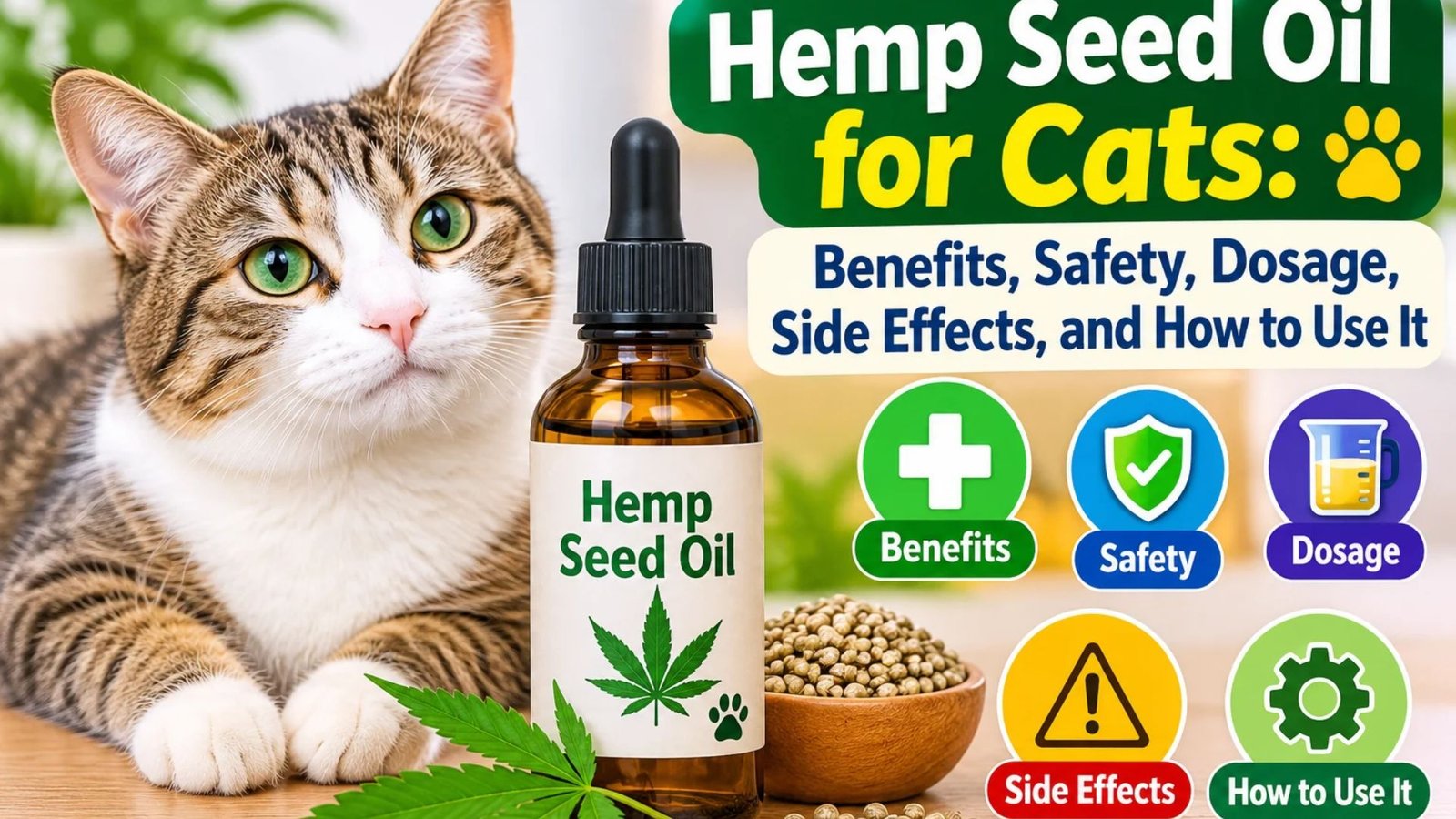
Hemp seed oil for cats is becoming a popular topic among pet owners interested in natural nutrition, healthy skin, and a shiny coat. Extracted from the seeds of the hemp plant, this plant-based oil contains essential fatty acids, particularly omega-3 and omega-6, which play important roles in maintaining normal skin function and overall health.
Many cat owners consider adding hemp seed oil to their pets’ diets because they want to support dry skin, improve coat condition, or provide additional nutritional value. However, questions about safety, appropriate amounts, possible side effects, and the difference between hemp seed oil and CBD oil are equally important.
Although hemp seed oil can provide useful nutrients, it is not a medicine and should not be considered a treatment for allergies, arthritis, inflammation, or other feline health conditions. Cats also have specific nutritional requirements, so introducing any supplement requires careful consideration.
This guide explains hemp seed oil for cats, including its nutritional properties, potential benefits, safety considerations, dosage, and practical ways to introduce it into your cat’s diet.
What Is Hemp Seed Oil for Cats?
Hemp seed oil is a plant-based oil produced by pressing the seeds of the hemp plant (Cannabis sativa). It is naturally rich in polyunsaturated fatty acids, including omega-3 and omega-6, which contribute to normal skin function and other biological processes.
Unlike products made from hemp flowers and leaves, properly produced hemp seed oil comes from the seeds themselves. It is primarily a nutritional oil rather than a cannabinoid supplement.
For cats, hemp seed oil may provide additional dietary fatty acids when used appropriately. Some pet-specific products are formulated to make it easier for owners to add small quantities to their cat’s regular food.
However, hemp seed oil is not nutritionally complete. It cannot replace a balanced commercial cat food or a properly formulated homemade feline diet.
ALSO READ:Gloves for Cat Handling: Types, Safety Features, Benefits, and How to Choose the Right Pair
What makes hemp seed oil different from ordinary cooking oils?
Its fatty acid composition is one of its distinguishing features. It contains both omega-3 and omega-6 fatty acids, including alpha-linolenic acid (ALA) and linoleic acid (LA).
These nutrients help support normal cellular function, skin health, and other important processes.
Cat owners should remember that not every product labelled hemp oil contains the same ingredients. Reading the label is essential before purchasing a supplement.
Hemp Seed Oil vs. CBD Oil: What Is the Difference?
One of the biggest sources of confusion is the difference between hemp seed oil and CBD oil.
Both products may come from the same plant, but they are made from different plant materials and serve different purposes.
Hemp seed oil is extracted from hemp seeds, while CBD oil is produced using hemp or cannabis plant material containing cannabidiol.
Here are the main differences:
| Feature | Hemp Seed Oil | CBD Oil |
| Main source | Hemp seeds | Hemp plant extracts |
| Omega fatty acids | Naturally present | Depends on carrier oil |
| CBD content | Little to none | Contains cannabidiol |
| THC content | Normally negligible | Depends on extraction and formulation |
| Main purpose | Nutritional support | Cannabinoid-based product |
| Primary nutritional value | Essential fatty acids | CBD is the main active compound |
Hemp seed oil is not the same as a full-spectrum hemp extract. Full-spectrum products may contain CBD, other cannabinoids, and potentially trace amounts of THC.
This distinction matters because CBD and THC can affect animals differently.
The Merck Veterinary Manual explains that CBD has its own pharmacological effects and that cannabinoid products may cause adverse reactions in pets, particularly when product quality or composition is uncertain.
For this reason, cat owners should never assume that every bottle labelled hemp oil is simply a fatty acid supplement.
Important: If you want a nutritional oil rather than a cannabinoid product, choose one that clearly states that it contains hemp seed oil and does not contain added CBD or THC.
Nutritional Composition of Hemp Seed Oil
The nutritional value of hemp seed oil comes mainly from its fatty acid content.
It contains several types of fats that contribute to normal body functions. Understanding these nutrients helps explain why some pet owners consider hemp seed oil as an additional dietary supplement.
Omega-3 Fatty Acids
Omega-3 fatty acids are important for normal cell function and healthy skin.
Hemp seed oil contains alpha-linolenic acid (ALA), a plant-based omega-3 fatty acid.
In cats, omega-3 fatty acids are involved in several biological processes. However, cats have limited ability to convert ALA into longer-chain omega-3 fatty acids such as EPA and DHA.
This means hemp seed oil should not automatically be considered a replacement for marine-derived omega-3 supplements when a veterinarian recommends EPA or DHA.
Omega-6 Fatty Acids
Hemp seed oil also contains linoleic acid (LA), an essential omega-6 fatty acid.
Linoleic acid is particularly important for maintaining the skin’s natural barrier. It helps support normal skin structure and reduces excessive water loss through the skin.
Cats require linoleic acid in their diets because their bodies cannot produce enough of it independently.
Other Nutritional Components
Depending on the extraction and processing method, hemp seed oil may also contain:
- Vitamin E and other naturally occurring antioxidants.
- Small amounts of other fatty acids.
- Plant-derived compounds present in the original seeds.
- Naturally occurring fat-soluble nutrients.
Cold-pressed hemp seed oil may retain more of its naturally occurring compounds because it is produced without intensive heat processing.
However, its nutritional composition can vary between manufacturers and products.
Potential Benefits of Hemp Seed Oil for Cats
Hemp seed oil may offer nutritional benefits when used appropriately as part of a balanced feline diet.
Its fatty acid content is the main reason cat owners consider adding it to their pets’ food.
It is important to distinguish between established nutritional roles and benefits that have not been adequately demonstrated in cats.
Supports Normal Skin Health
Healthy skin depends on an adequate supply of essential fatty acids.
Linoleic acid helps maintain the skin’s protective barrier, which supports moisture retention and normal skin function.
A cat receiving an appropriately balanced diet may benefit from the fatty acids in that diet. If a veterinarian identifies a dietary fatty acid deficiency, an additional source may sometimes be appropriate.
However, hemp seed oil should not be used as a substitute for diagnosing skin disease.
May Support a Healthy, Shiny Coat
A cat’s coat reflects several aspects of its overall health, including nutrition, grooming habits, and underlying medical conditions.
Essential fatty acids contribute to normal skin and coat condition.
When a cat’s diet is nutritionally inadequate, correcting the deficiency may improve coat quality over time.
Hemp seed oil can supply some of these fatty acids, but there is limited direct clinical evidence that supplementing otherwise healthy cats with hemp seed oil produces a noticeably shinier coat.
Provides Additional Dietary Fatty Acids
Cats need dietary fat for energy and normal physiological functions.
Hemp seed oil provides concentrated calories and polyunsaturated fats that can contribute to a cat’s overall dietary intake.
This may be useful in certain nutritional plans when a veterinarian recommends an additional source of fat.
However, more oil does not automatically mean better nutrition. Excessive supplementation can increase calorie intake and upset the balance of an otherwise complete diet.
May Contribute to Normal Skin Moisture
Essential fatty acids, especially linoleic acid, help maintain the skin barrier.
A healthy skin barrier helps reduce moisture loss and protects the body from environmental irritants.
For this reason, adequate fatty acid intake is important for cats that experience dry or flaky skin.
Nevertheless, dry skin can have several causes, and hemp seed oil will not correct every underlying problem.
Supports Overall Nutritional Balance
Hemp seed oil may contribute additional fatty acids to a cat’s diet.
It can be considered an optional nutritional addition when the cat’s existing food and health condition make supplementation appropriate.
It should never replace complete and balanced feline food, animal-based protein, or nutrients that cats require from other dietary sources.
Can Hemp Seed Oil Help Cats With Dry Skin and Itching?
Some cat owners consider hemp seed oil when their pets experience dry, flaky, or irritated skin.
There is a nutritional reason behind this interest: essential fatty acids, particularly linoleic acid, are important for maintaining healthy skin.
If a cat is not receiving adequate essential fatty acids, correcting that nutritional problem may help improve skin condition.
However, itching and dry skin are not always caused by dietary deficiencies.
- Flea infestations.
- Food allergies or adverse food reactions.
- Environmental allergies.
- Fungal infections such as ringworm.
- Bacterial skin infections.
- Mites and other parasites.
- Excessive grooming or stress.
- Certain hormonal or metabolic conditions.
Hemp seed oil cannot eliminate fleas, treat fungal infections, or cure allergic skin disease.
If your cat frequently scratches, develops bald patches, has sores, or experiences persistent irritation, arrange a veterinary examination rather than relying on an oil supplement.
A useful distinction: Hemp seed oil provides nutritional fatty acids. It is not a proven anti-itch medication or an established treatment for feline allergies.
Is Hemp Seed Oil Safe for Cats?
Pure hemp seed oil is generally considered a nutritional oil rather than an intoxicating cannabis product. Its composition is very different from CBD-rich extracts and THC-containing cannabis products.
However, this does not mean every hemp-labelled supplement is automatically safe for cats.
Safety depends on several factors:
- The purity and quality of the oil.
- The ingredients included in the product.
- The quantity given.
- Your cat’s weight and existing diet.
- Any underlying health conditions.
- Other supplements or medications your cat receives.
Choose a product specifically formulated for cats or approved by your veterinarian.
Avoid products containing unnecessary flavourings, essential oils, sweeteners, or other ingredients that may be unsuitable for feline consumption.
It is also important to understand that hemp seed oil has not been extensively studied as a supplement in cats. Therefore, claims about its long-term safety and specific therapeutic benefits should be treated cautiously.
Is Hemp Seed Oil Safe for Indoor Cats?
Indoor cats can have the same nutritional requirements as outdoor cats.
Their need for essential fatty acids does not disappear because they spend most of their time inside.
However, an indoor cat eating a complete and balanced diet may already receive sufficient fatty acids.
Additional supplementation should depend on the cat’s individual nutritional needs rather than its lifestyle alone.
Possible Side Effects of Hemp Seed Oil for Cats
Although hemp seed oil is a dietary fat, introducing too much oil can cause problems.
Cats respond differently to dietary changes, and some may experience digestive discomfort even when given relatively small amounts.
Possible side effects include:
Digestive Upset
Adding a new oil to your cat’s diet may cause:
- Loose stools.
- Diarrhea.
- Vomiting.
- Nausea.
- Reduced appetite.
These problems may occur if the oil is introduced too quickly or if the amount is unsuitable.
Excessive Calorie Intake
Oils are calorie-dense.
Regularly adding extra calories without adjusting the overall feeding plan may contribute to unwanted weight gain.
This is particularly important for indoor cats and cats that already struggle with maintaining a healthy weight.
Possible Allergic Reactions
Although uncommon, an individual cat may react negatively to a product or one of its additional ingredients.
Possible warning signs include:
- Increased itching.
- Skin redness.
- Swelling.
- Vomiting.
- Diarrhea.
- Unusual discomfort.
Stop giving the product and contact your veterinarian if you suspect an allergic reaction.
Breathing difficulty or facial swelling requires immediate veterinary attention.
Problems From Poor-Quality Products
Not all supplements are manufactured to the same standards.
Poor-quality products may have inaccurate labels, oxidation, contamination, or ingredients that are not suitable for cats.
This is why product quality is just as important as the oil itself.
How Much Hemp Seed Oil Can You Give a Cat?
There is no universally established hemp seed oil dosage for cats.
The appropriate quantity depends on several factors, including the cat’s body weight, existing diet, health condition, and the concentration and composition of the product.
A kitten, a small adult cat, and an overweight senior cat should not automatically receive the same amount.
Additionally, different manufacturers may produce oils with different fatty acid concentrations.
Why a Universal Dosage Is Not Appropriate
Consider two hemp seed oil products.
One may contain a different amount of fat per millilitre than another. Even if both bottles contain the same volume, their nutritional contribution may differ.
A cat eating a complete commercial diet may also have different supplementation needs from a cat receiving a veterinarian-designed therapeutic diet.
Therefore, copying a dosage from another cat owner or following a random online recommendation is not a reliable approach.
How to Determine an Appropriate Amount
Before starting supplementation:
- Check your cat’s current body weight.
- Review the ingredients and nutritional information.
- Check how much oil the product contains per serving.
- Consider the calories added to the daily diet.
- Discuss the product with your veterinarian.
- Follow the veterinarian’s recommended amount.
Do not increase the quantity simply because you want faster results.
If your cat develops digestive problems after starting the oil, stop supplementation and seek veterinary guidance.
How to Give Hemp Seed Oil to Cats
If your veterinarian agrees that hemp seed oil is appropriate, introducing it gradually can make the dietary change easier.
Cats can be sensitive to unfamiliar smells and flavours, so patience is important.
Mix It With Wet Cat Food
One simple approach is to mix the veterinarian-approved quantity into a small portion of wet cat food.
Wet food often has a stronger smell and flavour, which may help disguise the oil.
Make sure your cat eats the entire portion before offering the rest of the meal.
Introduce It Gradually
Avoid suddenly adding a large quantity to your cat’s regular food.
Follow your veterinarian’s introduction plan and monitor your cat’s response.
Watch for changes in appetite, stool consistency, vomiting, or unusual behaviour.
Use the Product’s Measuring Instructions
Some products include a measuring dropper or pump.
Use the manufacturer’s measuring instructions together with your veterinarian’s recommended amount.
Do not estimate quantities by pouring oil directly from the bottle.
Avoid Forcing Your Cat to Take It
If your cat refuses food containing hemp seed oil, do not force-feed the supplement.
Try discussing alternative nutritional options with your veterinarian.
The purpose of supplementation is to support an appropriate diet, not to create unnecessary stress around mealtime.
How to Choose the Best Hemp Seed Oil for Cats
Choosing a high-quality product is essential because supplements can vary considerably in their ingredients, processing, and quality controls.
The best option is not necessarily the most expensive bottle or the one with the most impressive marketing claims.
Look for the following features when evaluating a product.
Choose a Cat-Specific Formula
Look for a product specifically designed for cats.
Cat-specific formulations are more likely to provide appropriate serving instructions and ingredient information for feline use.
Do not assume that a human hemp oil supplement or a dog supplement is automatically suitable for cats.
Check the Ingredient List
A good-quality hemp seed oil should have a clear and understandable ingredient list.
Ideally, it should contain pure hemp seed oil without unnecessary additives.
Be particularly cautious about products containing CBD, THC, essential oils, artificial flavourings, or sweeteners.
Look for Independent Quality Testing
Choose manufacturers that provide independent laboratory testing or a certificate of analysis (COA).
Testing information may help verify:
- Product identity.
- Fatty acid composition.
- Cannabinoid content.
- Heavy metal contamination.
- Pesticide residues.
- Microbial quality.
A certificate of analysis should relate to the actual product batch rather than being a generic document.
Consider Cold-Pressed Oil
Cold-pressed hemp seed oil is produced by mechanically extracting oil from the seeds without intensive heating.
This processing method can help preserve naturally occurring fatty acids and other sensitive compounds.
However, cold-pressed does not automatically mean the product is safe or superior in every respect.
Manufacturing quality, freshness, storage, and testing remain important.
Check the Expiration Date
Hemp seed oil contains polyunsaturated fats that can oxidize when exposed to heat, oxygen, and light.
Always check the manufacturing and expiration dates.
Avoid products with damaged seals or unclear storage instructions.
Avoid Unproven Medical Claims
Be cautious when a manufacturer promises that its product can cure arthritis, eliminate allergies, stop itching, or treat serious feline diseases.
Hemp seed oil is primarily a nutritional oil.
Reliable manufacturers should provide transparent information instead of making exaggerated medical promises.
Can Kittens and Senior Cats Use Hemp Seed Oil?
Age is an important consideration when deciding whether to introduce any supplement.
Kittens, adult cats, and senior cats have different nutritional needs and may respond differently to dietary changes.
Hemp Seed Oil for Kittens
Kittens need carefully balanced nutrition to support rapid growth and development.
A complete kitten food should provide the nutrients and energy required during this important stage.
Although hemp seed oil contains essential fatty acids, it should not be added to a kitten’s diet without veterinary advice.
Too much supplemental oil may interfere with calorie balance and cause digestive upset.
Young kittens with poor growth, dry skin, or digestive problems should receive a proper veterinary assessment rather than an unplanned supplement.
Hemp Seed Oil for Adult Cats
Healthy adult cats generally obtain their essential fatty acids from complete and balanced food.
Some may have specific nutritional requirements that justify additional supplementation.
However, hemp seed oil is not necessary for every adult cat.
Discuss its potential usefulness with your veterinarian before making it a regular part of your cat’s diet.
Hemp Seed Oil for Senior Cats
Older cats may experience changes in skin condition, coat quality, mobility, appetite, and body weight.
Their nutritional needs may also change as they age.
Hemp seed oil can provide additional dietary fat, but it should not be considered a treatment for arthritis, kidney disease, or age-related inflammation.
Senior cats with chronic health problems should receive veterinary advice before starting any new supplement.
When Should You Avoid Giving Hemp Seed Oil to Your Cat?
Some cats may not be suitable candidates for additional dietary oils.
Avoid starting hemp seed oil without veterinary approval if your cat has:
- A history of pancreatitis.
- Chronic digestive problems.
- Persistent vomiting or diarrhea.
- A history of food sensitivities.
- Unexplained weight gain.
- An existing medical condition requiring a controlled diet.
- Known sensitivity to the product’s ingredients.
Cats receiving prescription diets also need special consideration.
For example, a cat with kidney disease may be following a carefully designed nutritional plan. Adding an unapproved supplement could interfere with that plan.
Possible Medication Interactions
Although hemp seed oil is different from CBD oil, owners should still discuss supplementation with their veterinarian when their cats take regular medication.
Additional dietary fat may affect how an individual animal tolerates its food or medication routine.
More importantly, products marketed as hemp oil may contain CBD or other active compounds that can interact with medicines.
CBD is metabolized through pathways involving liver enzymes, including cytochrome P450 enzymes. This creates potential interaction concerns with certain medications.
Never assume a hemp-derived product is harmless simply because it is sold as a natural supplement.
Hemp Seed Oil Storage and Freshness Tips
Proper storage is important because hemp seed oil contains polyunsaturated fatty acids that can become rancid when exposed to oxygen, heat, and light.
An oxidized oil may develop an unpleasant smell and lose some of its nutritional quality.
Follow these storage recommendations:
- Keep the bottle tightly closed after every use.
- Store it according to the manufacturer’s instructions.
- Refrigerate it if the label recommends refrigeration.
- Keep it away from direct sunlight.
- Avoid leaving it near ovens or other heat sources.
- Use a clean measuring dropper.
- Follow the expiration date and recommended period after opening.
How to Recognize Spoiled Hemp Seed Oil
Fresh hemp seed oil generally has a mild, nutty, or grassy smell.
Signs that an oil may have deteriorated include:
- A strong rancid or unpleasant smell.
- A bitter or noticeably unusual taste.
- Changes in appearance that are inconsistent with the product’s normal characteristics.
- An expired date.
- Improper storage or a damaged seal.
Do not give your cat oil that smells rancid or appears spoiled.
When in doubt, discard the product and replace it with a fresh, properly stored bottle.
Common Misconceptions About Hemp Seed Oil for Cats
There is considerable confusion surrounding hemp products, particularly because different products may use similar names.
Understanding the following misconceptions can help cat owners make safer decisions.
Hemp Seed Oil Contains CBD
This is generally incorrect.
Pure hemp seed oil is extracted from seeds and contains little to no CBD.
CBD is mainly obtained from other parts of the hemp or cannabis plant.
A product labelled hemp oil may contain additional extracts, so checking the ingredients is essential.
Hemp Seed Oil Makes Cats High
Pure hemp seed oil does not have the intoxicating effects associated with THC.
THC is the primary intoxicating cannabinoid found in cannabis.
However, contaminated or incorrectly labelled hemp products may contain cannabinoids that are not expected in pure seed oil.
Choose transparent, tested products.
Hemp Seed Oil Can Cure Arthritis
There is insufficient clinical evidence to establish hemp seed oil as a treatment for feline arthritis.
Its fatty acids have nutritional functions, but that does not mean the oil can reverse joint damage or reliably relieve arthritis pain.
A cat experiencing stiffness, difficulty jumping, or reduced mobility needs veterinary assessment.
All Hemp Products Are the Same
They are not.
Hemp seed oil, CBD oil, full-spectrum hemp extract, and other cannabis-derived products have different compositions.
The name on the front of the bottle does not provide enough information to determine its contents.
Always read the full label.
Natural Supplements Are Always Safe
Natural ingredients can still cause adverse reactions.
The amount, quality, purity, and individual health of the cat all matter.
A natural product should never be considered automatically safe just because it comes from a plant.
When Does Your Cat Need Veterinary Treatment Instead of Dietary Oils?
Hemp seed oil may be considered as an optional nutritional supplement, but it should never delay veterinary treatment.
Certain symptoms indicate that a cat needs professional assessment rather than an attempt to improve its condition through dietary changes.
Contact your veterinarian if your cat experiences:
- Persistent itching or excessive scratching.
- Hair loss or bald patches.
- Open sores or bleeding skin.
- Swelling, redness, or painful skin.
- Repeated vomiting or diarrhea.
- Loss of appetite.
- Unexplained weight loss.
- Difficulty walking or jumping.
- Persistent stiffness or signs of pain.
Some skin problems may require prescription medication, parasite treatment, dietary trials, or diagnostic testing.
If your cat accidentally consumes a CBD or THC product, contact a veterinarian promptly. Signs of cannabis exposure can include unusual sleepiness, poor coordination, vomiting, trembling, and urinary incontinence.
Conclusion
Hemp seed oil for cats can provide additional nutritional fatty acids, including omega-3 and omega-6, that contribute to normal skin function and overall nutritional health. Its linoleic acid content is particularly relevant to maintaining the skin’s natural protective barrier, while its other fatty acids contribute to normal biological processes.
However, hemp seed oil is not a cure for dry skin, allergies, arthritis, or inflammation. It is also different from CBD oil and THC-containing cannabis products, which have separate safety considerations.
Before introducing hemp seed oil into your cat’s regular diet, choose a high-quality, clearly labelled product and discuss its suitability with your veterinarian. The appropriate amount depends on your cat’s weight, existing food, health condition, and the product’s composition.
Ultimately, a complete and balanced diet, regular veterinary care, and attention to your cat’s individual nutritional needs are more important than adding unnecessary supplements. When used thoughtfully and with professional guidance, hemp seed oil may be a useful nutritional option for some cats.
ALSO READ:Fast Cat Calculator: How It Works, What It Measures, and How to Use It
FAQs
Is hemp seed oil safe for cats?
Pure hemp seed oil may be suitable as an occasional nutritional supplement for some cats when used appropriately. However, safety depends on product quality, quantity, and individual health. Consult your veterinarian before introducing it regularly.
Can hemp seed oil help cats with dry skin?
Hemp seed oil contains linoleic acid, an essential fatty acid that supports normal skin function. It may contribute to nutritional skin support, but it is not a proven treatment for persistent dryness, allergies, or itching.
Is hemp seed oil the same as CBD oil for cats?
No. Hemp seed oil comes from hemp seeds and contains little to no CBD. CBD oil contains cannabidiol extracted from hemp or cannabis plant material. They have different compositions and purposes.
How often can I give hemp seed oil to my cat?
There is no universally established feeding frequency for every cat. The appropriate schedule depends on the product, your cat’s diet, body weight, and health. Follow your veterinarian’s instructions and the product’s feeding guidance.
Can hemp seed oil cause side effects in cats?
Yes. Some cats may experience digestive upset, vomiting, diarrhea, or an adverse reaction to the product. Excessive supplementation can also contribute unnecessary calories to the diet. Stop using it and contact your veterinarian if problems occur.
Related Post

Cat Interact: How Cats Communicate, Play, Bond, and Connect With Humans
Cats may seem independent, but they have many interesting ways of connecting with people, other [...]
How Do You Know If Cats Are Playing or Fighting?
If you have two cats at home, you may have watched them chase, bite, wrestle, [...]