
How Many Teeth Has a Cat? A Complete Guide to Kitten and Adult Cat Teeth
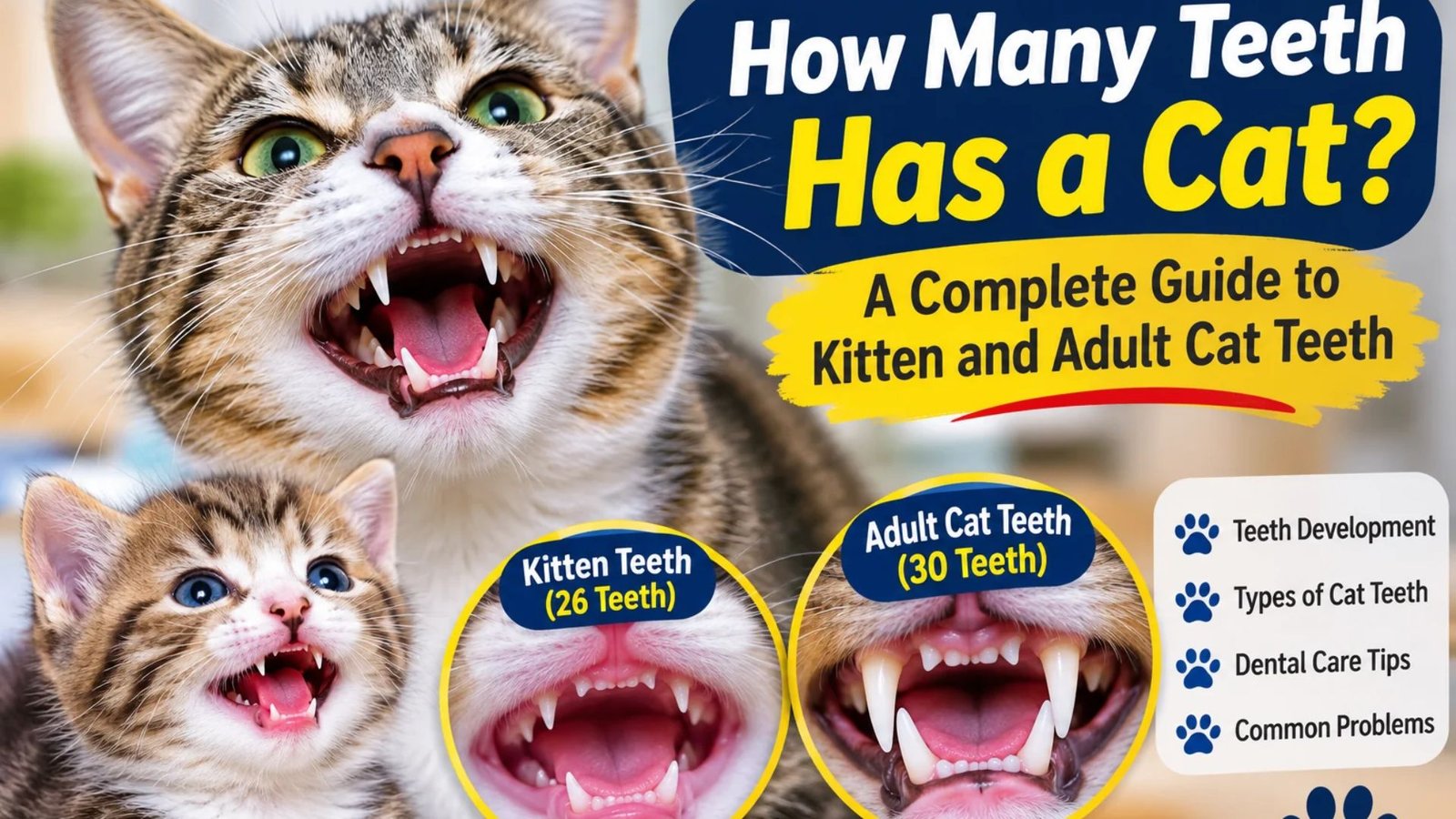
If you have ever wondered how many teeth has a cat, the answer depends on the cat’s age. An adult cat typically has 30 permanent teeth, while a young kitten develops 26 baby teeth. Just like humans, cats go through two stages of dental development: their temporary baby teeth grow first, and these are eventually replaced by permanent adult teeth.
A cat’s teeth are essential for more than just eating. They help cats catch and hold prey, tear food into smaller pieces, groom their fur, and protect themselves when necessary. Healthy teeth and gums also play an important role in a cat’s overall well-being.
Understanding your cat’s dental development can help you recognize normal changes, identify possible dental problems, and provide better care throughout its life.
Whether you have a playful kitten or an older adult cat, knowing what to expect from its teeth can make a real difference in maintaining good oral health.
How Many Teeth Do Kittens Have?
Kittens are not born with visible teeth. During their first few weeks, they depend entirely on their mother’s milk or suitable kitten milk replacer for nutrition.
As they grow, their first set of teeth begins to emerge. These temporary teeth are called deciduous teeth or baby teeth.
A fully developed set of kitten baby teeth contains 26 teeth.
These teeth are smaller and sharper than adult cat teeth. Their main purpose is to help kittens begin eating solid food as they become more independent.
Kitten baby teeth include:
- 12 incisors (small front teeth).
- 4 canine teeth (pointed teeth).
- 10 premolars (teeth located behind the canines).
Unlike adult cats, kittens do not have molars in their baby set.
During this stage, kittens may begin chewing toys, food, and other objects as their teeth develop. This behavior is generally normal, although owners should provide safe kitten toys and avoid objects that could damage their mouths.
How Many Teeth Do Adult Cats Have?
Adult cats typically have 30 permanent teeth. These teeth replace the 26 temporary teeth that kittens develop during their early months.
The adult set contains four additional teeth compared with the kitten set because permanent cats develop molars that are absent from their baby teeth.
An adult cat’s 30 teeth include:
- 12 incisors.
- 4 canine teeth.
- 10 premolars.
- 4 molars.
Adult cat teeth are designed to help cats grip, tear, and cut food rather than chew in the same way humans do.
Although cats can eat different types of food, their teeth are naturally adapted to a carnivorous diet.
The number of teeth is generally the same across domestic cat breeds. A Persian, Siamese, Maine Coon, or ordinary domestic shorthair typically has the same adult dental arrangement.
However, some cats may have fewer visible teeth because of previous dental disease, injuries, extractions, or developmental abnormalities.
Kitten Teeth vs. Adult Cat Teeth: What’s the Difference?
Kittens and adult cats have different numbers of teeth because they go through two separate stages of dental development.
Here is a simple comparison:
| Feature | Kitten | Adult Cat |
| Number of teeth | 26 | 30 |
| Type | Baby teeth | Permanent teeth |
| Incisors | 12 | 12 |
| Canines | 4 | 4 |
| Premolars | 10 | 10 |
| Molars | 0 | 4 |
| Development | Early weeks | Around 6–7 months |
The most noticeable difference is the presence of molars in adult cats.
Baby teeth are temporary, while permanent teeth are designed to last throughout adulthood. This is why monitoring a kitten’s mouth during its first year is important.
When Do Kittens Start Growing Teeth?
Kittens generally begin developing their first baby teeth when they are around two to three weeks old.
The process happens gradually rather than all at once.
Here is a general timeline of kitten teeth development:
- Around 2–3 weeks: The small front incisors begin appearing.
- Around 3–4 weeks: The pointed canine teeth start emerging.
- Around 4–6 weeks: Premolars begin growing.
- Around 6–8 weeks: Most kittens have their complete set of 26 baby teeth.
By approximately eight weeks of age, a kitten will usually have all its baby teeth.
However, the exact timing can vary slightly between individual kittens.
During this period, kittens become more interested in solid food and gradually move away from depending entirely on their mother.
If you notice unusual swelling, bleeding, or difficulty eating during teething, contact a veterinarian rather than assuming it is a normal part of development.
When Do Cats Lose Their Baby Teeth?
Cats usually begin losing their baby teeth at around three to four months of age.
This process is called tooth replacement or teething. As permanent teeth develop underneath the baby teeth, the temporary teeth gradually loosen and fall out.
Most cats complete this process by approximately six to seven months of age.
The general replacement timeline looks like this:
- 3–4 months: Permanent incisors begin appearing.
- 4–5 months: Adult canine teeth start replacing baby canines.
- 4–6 months: Permanent premolars develop.
- 5–7 months: Permanent molars emerge, completing the adult set.
You may occasionally find a tiny tooth on the floor, in your kitten’s bedding, or near its food bowl.
However, many kittens swallow their baby teeth while eating or grooming. This is usually harmless.
During teething, your kitten may show several temporary behaviors, including:
- Chewing toys more frequently.
- Mild gum sensitivity.
- Increased interest in biting safe objects.
- Slight changes in eating habits.
- More frequent pawing around the mouth.
These behaviors should not be confused with severe dental pain. Persistent bleeding, significant swelling, or refusal to eat requires veterinary attention.
What Are the Different Types of Cat Teeth?
Adult cats have four main types of teeth. Each type has a different structure and purpose.
Understanding these teeth makes it easier to recognize how cats eat and use their mouths.
Incisors
Incisors are the small teeth located at the front of the mouth. Adult cats have 12 incisors, with six on the upper jaw and six on the lower jaw.
They help cats scrape small pieces of food, pick up objects, and perform certain grooming activities.
Canines
Canines are the long, pointed teeth located on both sides of the incisors.
Cats have four canine teeth, two on the upper jaw and two on the lower jaw.
These teeth help cats grip food, hold objects, and perform natural hunting behaviors.
Premolars
Premolars are located behind the canine teeth.
Adult cats have 10 premolars. These teeth help cut and break food into smaller pieces.
They are particularly useful when cats bite into meat or other suitable food.
Molars
Molars are the teeth positioned toward the back of the mouth.
Adult cats have four molars, two on the upper jaw and two on the lower jaw.
They help cats process food through a cutting action. Cats do not grind food as extensively as humans do.
What Is the Purpose of Each Type of Cat Tooth?
Every type of cat tooth has a specific function. Together, they help cats eat, groom, and interact with their environment.
Here is a quick overview:
| Tooth Type | Main Purpose |
| Incisors | Scraping, picking up food, and grooming |
| Canines | Gripping, holding, and tearing |
| Premolars | Cutting food into smaller pieces |
| Molars | Further cutting and processing food |
Cats are natural carnivores, and their dental structure reflects their dietary needs.
Their pointed canine teeth help grip food, while their sharp cheek teeth help cut it into manageable pieces.
Even indoor cats that eat commercial cat food still depend on their teeth for normal daily activities.
How Can You Tell If Your Cat Has Healthy Teeth?
Healthy teeth are important at every stage of a cat’s life.
Although you should not attempt to diagnose dental conditions yourself, regularly checking your cat’s mouth can help you notice changes that need veterinary attention.
Some common signs of healthy cat teeth include:
- Teeth that look clean and relatively white.
- Gums that are generally pink.
- No obvious swelling around the gums.
- No persistent bad breath.
- No visible bleeding.
- Normal eating and chewing behavior.
- No obvious broken or loose teeth.
Healthy gums should not look significantly swollen, bright red, or irritated.
It is also important to remember that a cat can have dental disease even if its teeth look relatively normal from the outside.
Some dental conditions develop below the gumline, where owners cannot easily see them.
A veterinarian can perform a more complete oral examination and recommend dental X-rays when necessary.
Common Dental Problems in Cats
Cats can develop several dental problems as they grow older. Some conditions cause noticeable discomfort, while others remain hidden until they become more advanced.
Knowing the common problems can help owners seek treatment earlier.
Periodontal Disease
Periodontal disease is one of the most common dental problems in cats.
It begins when plaque accumulates on the teeth. Plaque contains bacteria that can irritate the gums and eventually lead to inflammation.
Without proper care, the condition may progress and damage the tissues supporting the teeth.
Possible signs include:
- Red or swollen gums.
- Persistent bad breath.
- Difficulty eating.
- Drooling.
- Loose teeth.
Professional dental treatment and regular home care can help manage this condition.
Tooth Resorption
Tooth resorption is a painful condition in which the structures of a tooth gradually break down.
It is relatively common in cats, particularly as they get older.
The condition may affect the visible part of the tooth or develop below the gumline.
Possible warning signs include:
- Dropping food while eating.
- Chewing on one side of the mouth.
- Sudden sensitivity around the mouth.
- Excessive drooling.
- Difficulty eating hard food.
A veterinary examination and dental X-rays are often necessary to identify affected teeth.
Gingivitis
Gingivitis refers to inflammation of the gums.
It can develop when plaque and bacteria accumulate around the teeth.
Cats with gingivitis may have red, swollen, or sensitive gums.
Early treatment is important because untreated gum inflammation can contribute to more serious periodontal disease.
Broken or Fractured Teeth
Cats can break their teeth through injuries, accidents, or biting hard objects.
Canine teeth are particularly noticeable when damaged because of their length and position.
A fractured tooth may expose sensitive internal structures, causing significant pain.
Even if your cat continues eating normally, a broken tooth should be examined by a veterinarian.
Feline Chronic Gingivostomatitis
This is a severe inflammatory condition affecting the gums and other tissues inside a cat’s mouth.
It can cause considerable discomfort and make eating difficult.
Affected cats may experience:
- Severe mouth inflammation.
- Drooling.
- Bad breath.
- Difficulty swallowing.
- Reduced appetite.
- Weight loss.
Veterinary treatment is essential because this condition can seriously affect a cat’s quality of life.
Signs Your Cat May Have Tooth Pain
Cats are naturally good at hiding discomfort. As a result, dental pain can sometimes go unnoticed for a long time.
A cat may continue eating even when it has a painful tooth.
Pay attention to changes in your cat’s normal behavior.
Some common warning signs include:
- Eating more slowly than usual.
- Dropping food while chewing.
- Avoiding dry food.
- Chewing on only one side.
- Excessive drooling.
- Pawing at the mouth.
- Bad breath.
- Red or bleeding gums.
- Becoming less interested in food.
- Hiding or becoming unusually irritable.
One important thing to remember is that cats do not always stop eating when their mouths hurt.
If you notice these symptoms, arrange a veterinary examination. A cat that cannot eat or swallow, has facial swelling, or appears severely distressed needs prompt veterinary attention.
Why Do Some Cats Lose Their Teeth?
Adult cats should not normally lose healthy permanent teeth.
Although losing baby teeth is a natural part of kitten development, tooth loss in adult cats often indicates an underlying problem.
Several factors can contribute to adult cat tooth loss.
Dental Disease
Advanced periodontal disease can damage the tissues and structures that hold teeth in place.
As the supporting tissues become weaker, teeth may become loose and eventually fall out.
Tooth Resorption
Tooth resorption can progressively destroy a tooth. In many cases, veterinary extraction is necessary to remove the affected tooth and relieve discomfort.
Physical Injuries
Falls, accidents, and other injuries can cause broken or displaced teeth.
Some injuries may also damage the jaw or surrounding tissues.
Severe Oral Inflammation
Conditions such as chronic gingivostomatitis can affect the tissues around the teeth and may require extensive veterinary treatment.
If an adult cat suddenly loses a tooth, do not ignore it.
Even if your cat appears comfortable, a veterinarian should examine its mouth to identify the cause.
How to Keep Your Cat’s Teeth Clean and Healthy
Good dental care should become part of your cat’s regular health routine.
You do not need complicated equipment to begin protecting your cat’s teeth. Consistent home care, appropriate products, and professional veterinary examinations are the most important steps.
Brush Your Cat’s Teeth Regularly
Brushing is one of the most effective ways to reduce plaque accumulation.
Ideally, brush your cat’s teeth daily.
Use a toothbrush designed for cats and veterinary-approved toothpaste.
Never use ordinary human toothpaste because some ingredients, including fluoride and certain sweeteners, may be harmful if swallowed.
Start slowly by allowing your cat to become familiar with the toothbrush and toothpaste.
You can follow these steps:
- Let your cat smell and investigate the toothbrush.
- Introduce a small amount of cat-safe toothpaste.
- Gently touch the lips and teeth.
- Gradually begin brushing the outer surfaces of the teeth.
- Keep each session short and positive.
- Reward your cat with praise after brushing.
Do not force the process if your cat becomes frightened or aggressive.
Choose Appropriate Dental Products
Some products are specifically designed to support feline dental health.
These may include:
- Veterinary-approved dental treats.
- Cat dental toothbrushes.
- Veterinary-approved oral gels.
- Dental diets.
- Products carrying the Veterinary Oral Health Council (VOHC) Seal of Acceptance.
Look for products specifically intended for cats rather than assuming that dog dental products are suitable.
Dental treats can support oral care, but they should not replace brushing or professional examinations.
Provide Suitable Food and Water
Feed your cat a complete and balanced diet appropriate for its age and health requirements.
Both wet and dry food can be part of a healthy feline diet.
However, ordinary dry food does not automatically clean a cat’s teeth. Certain specially formulated dental diets are designed to provide additional dental benefits.
Always provide fresh drinking water.
Schedule Regular Veterinary Checkups
Routine veterinary visits help identify dental problems before they become more serious.
Your veterinarian can check for plaque, gum inflammation, damaged teeth, and other oral health concerns.
Regular examinations are especially important for older cats and those with a history of dental disease.
Do Cats Need Professional Dental Cleaning?
Yes. Some cats need professional dental cleaning to remove plaque and hardened tartar that cannot be removed through ordinary home brushing.
Professional cleaning is different from brushing your cat’s teeth at home.
A veterinary dental procedure generally involves:
- Examining the teeth and gums.
- Removing plaque and tartar.
- Cleaning areas below the gumline.
- Polishing the teeth.
- Performing dental X-rays when indicated.
- Identifying damaged or diseased teeth.
- Extracting teeth when medically necessary.
Professional dental cleaning is generally performed under general anesthesia so the veterinarian can safely examine and clean all surfaces of the teeth, including those below the gumline.
Anesthesia-free cosmetic cleaning is not an equivalent substitute because it cannot provide the same complete examination and treatment.
The frequency of professional cleaning depends on your cat’s individual dental condition, age, and risk factors.
Your veterinarian can recommend an appropriate schedule.
What Happens If a Cat Loses a Tooth?
Losing a baby tooth during kittenhood is completely normal.
However, losing a permanent tooth as an adult is different and should be investigated.
The effect of tooth loss depends on the reason, the number of missing teeth, and the cat’s overall oral health.
Many cats can live comfortably with several missing teeth, and even cats that have had many teeth extracted can often continue eating well once their mouths have healed.
However, the underlying dental condition must be addressed.
If your cat loses a tooth, consider these steps:
- Check for obvious bleeding without forcing its mouth open.
- Avoid touching the affected area unnecessarily.
- Do not attempt to pull out a loose tooth yourself.
- Contact your veterinarian for an examination.
- Follow the veterinarian’s feeding and recovery instructions.
If a tooth has been knocked out because of an injury, seek prompt veterinary advice.
Do not assume that the problem has disappeared simply because the tooth is no longer visible.
When Should You Take Your Cat to the Veterinarian?
You should arrange a veterinary examination whenever you notice unusual changes in your cat’s teeth, gums, or eating behavior.
Some dental problems progress slowly, while others can cause sudden and severe discomfort.
Contact your veterinarian if you notice:
- Persistent bad breath.
- Red, swollen, or bleeding gums.
- Broken or loose teeth.
- Excessive drooling.
- Difficulty chewing or swallowing.
- Food falling out of the mouth.
- Reduced appetite.
- Visible swelling around the face or jaw.
- Unusual sensitivity around the mouth.
A cat that refuses food because of suspected mouth pain should be assessed promptly.
If there is significant facial swelling, uncontrolled bleeding, or difficulty breathing or swallowing, seek urgent veterinary care.
Do not try to treat serious dental conditions using human painkillers, home remedies, or leftover medication.
Cats require veterinary guidance because some medicines commonly used by humans can be extremely dangerous to them.
Conclusion
So, how many teeth has a cat? The answer is 26 baby teeth for kittens and 30 permanent teeth for adult cats. These teeth develop gradually during the first six to seven months of life and help cats eat, groom, and perform their natural activities.
Understanding cat teeth development makes it easier to recognize normal teething changes and identify possible dental problems.
Regular brushing, suitable dental products, routine veterinary examinations, and professional cleaning when needed can all help protect your cat’s oral health.
Remember that cats often hide dental discomfort, so changes in eating habits, bad breath, swollen gums, or unusual behavior should never be ignored.
By making dental care part of your cat’s everyday routine, you can help support a healthier and more comfortable life from kittenhood through adulthood.
ALSO READ:Common House Cat Breeds: 15 Popular Cats, Their Traits, Personalities, and Care Needs
FAQs
1. How many teeth does an adult cat have?
An adult cat typically has 30 permanent teeth. These include 12 incisors, 4 canines, 10 premolars, and 4 molars. These teeth help cats grip, tear, and cut their food.
2. Do kittens have fewer teeth than adult cats?
Yes. Kittens develop 26 baby teeth, while adult cats have 30 permanent teeth. The adult set includes four molars that are not present in the kitten’s baby teeth.
3. At what age do cats get all their adult teeth?
Most cats develop their complete set of 30 permanent teeth by approximately six to seven months of age. The process usually begins around three to four months when baby teeth start falling out.
4. Is it normal for cats to lose teeth?
Losing baby teeth during kittenhood is normal. However, adult cats should not normally lose healthy permanent teeth. Tooth loss in adulthood may indicate dental disease, tooth resorption, or an injury and should be checked by a veterinarian.
5. Do cats need their teeth brushed every day?
Daily brushing is ideal for reducing plaque and supporting healthy gums. Use a cat-specific toothbrush and veterinary-approved toothpaste. Introduce brushing gradually to help your cat become comfortable with the routine.
Related Post

Best Male Cat Names: 150+ Ideas for Your New Cat
Choosing a name for your male cat is one of the most enjoyable parts of [...]
How Long Can Cats Hold Their Pee? A Complete Guide
Cats are usually good at using their litter boxes, but sometimes they may go longer [...]