Common House Cat Breeds: 15 Popular Cats, Their Traits, Personalities, and Care Needs
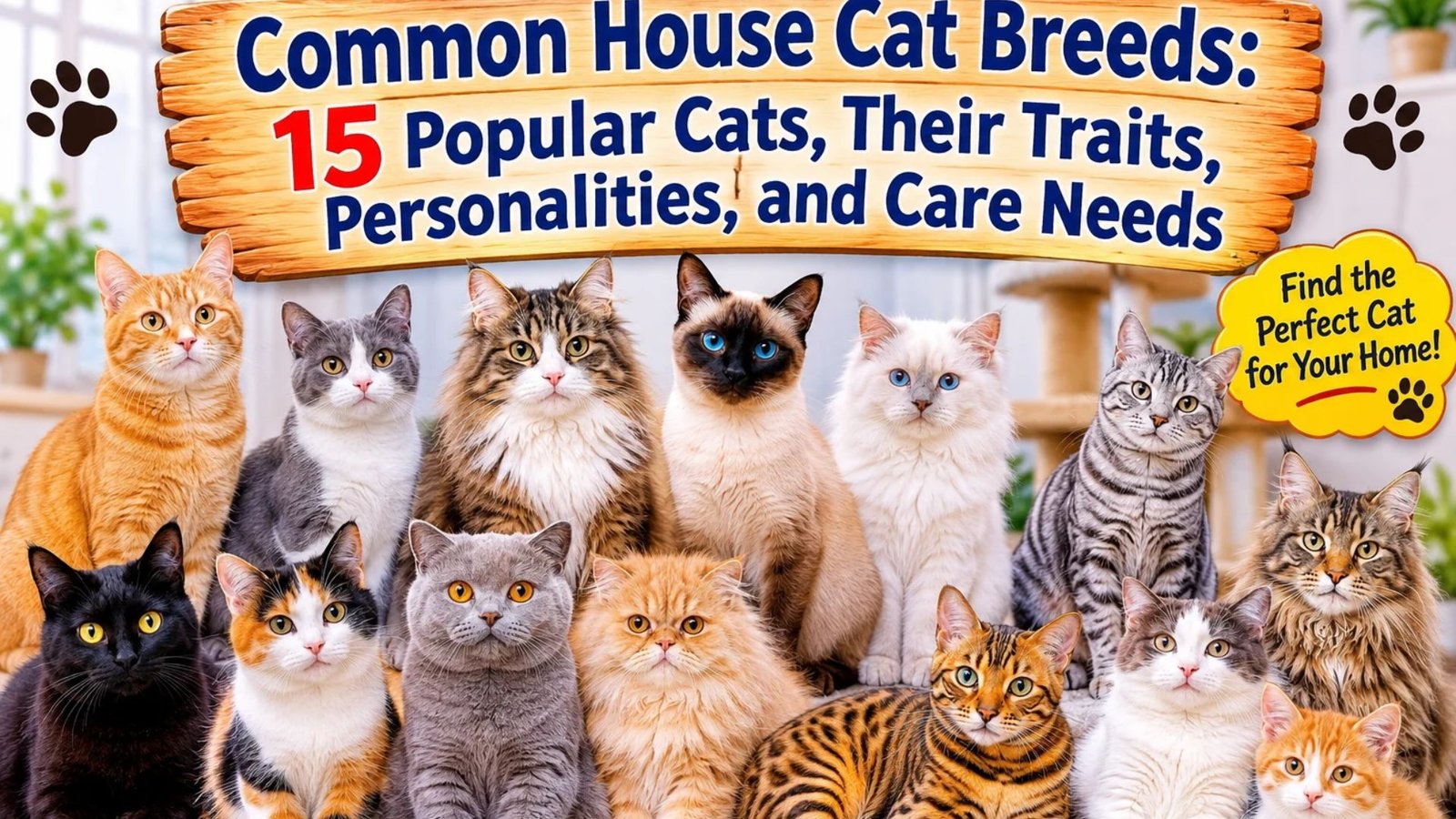
Choosing a cat is an exciting experience, especially when you discover how many different types of domestic cats can become wonderful household companions. Some cats are calm and affectionate, while others are playful, energetic, curious, or independent. Their appearance, personality, grooming requirements, and activity levels can vary considerably.
Understanding common house cat breeds can help future cat owners find a feline companion that fits their home, family, and lifestyle. Whether you live in a small apartment, have children, or are looking for your first pet, there are many beautiful domestic cats to consider.
Some popular cats have recognizable pedigrees, such as the Maine Coon, Persian, Siamese, and British Shorthair. Others are mixed-breed domestic cats that come in countless colors, patterns, and coat lengths.
In this guide, we explore 15 popular house cats, their physical characteristics, personalities, grooming needs, and suitability for different households. We also explain how to choose a healthy cat and provide the care needed to help your new companion enjoy a comfortable life indoors.
What Are Common House Cat Breeds?
Common house cat breeds are types of domestic cats frequently kept as household pets. They include recognized purebred cats, such as the Ragdoll and American Shorthair, as well as mixed-breed cats commonly found in shelters and rescue organizations.
Domestic cats belong to the species Felis catus. Although they share the same basic species classification, their appearance, body size, coat type, and typical behavioral tendencies can differ.
Some breeds have developed recognizable characteristics through selective breeding. For example, Maine Coons are known for their large bodies and long coats, while Siamese cats are recognized for their color-point patterns and vocal personalities.
However, not every household cat belongs to a registered breed. Domestic Shorthairs and Domestic Longhairs are common descriptions used for mixed-breed cats with different coat lengths.
ALSO READ:Why Do Cats Meow So Much? Common Reasons, What Different Meows Mean, and How to Help
Several factors influence which cats become popular household companions:
- Personality: Many people prefer cats that are affectionate, friendly, or comfortable around families.
- Appearance: Coat colors, patterns, eye colors, and body shapes attract different owners.
- Grooming requirements: Some households prefer short-haired cats that generally require less brushing.
- Activity level: Playful cats suit owners who enjoy interactive activities, while calmer cats may suit quieter homes.
- Living environment: Apartment owners may prefer cats that can adapt comfortably to indoor living.
Understanding these differences makes it easier to choose a cat based on more than appearance alone.
15 Most Common House Cat Breeds
The following 15 popular domestic cat types include recognizable pedigreed breeds and common household cat varieties. Each has different physical features, care requirements, and behavioral tendencies.
1. American Shorthair
The American Shorthair is a popular domestic cat known for its sturdy body, round face, and short, dense coat. It comes in numerous colors and patterns, although the silver tabby is particularly recognizable.
Appearance and Size: American Shorthairs usually have medium-to-large bodies, strong legs, rounded heads, and well-developed muscles.
Personality and Temperament: These cats are often friendly, adaptable, and independent. Many enjoy spending time with their families without constantly demanding attention.
Grooming Needs: Their short coats are relatively easy to maintain. Weekly brushing is generally sufficient to remove loose hair.
Activity Level: They enjoy playing, climbing, and exploring but are not necessarily as energetic as some highly active breeds.
Family Suitability: American Shorthairs can make excellent companions for families, individuals, and first-time cat owners. Individual temperament and early socialization still matter.
2. British Shorthair
The British Shorthair is famous for its round face, thick coat, large eyes, and solid appearance. Its blue-gray coat is especially recognizable, although the breed comes in many other colors.
Appearance and Size: These cats have broad chests, strong legs, rounded bodies, and dense plush fur. They are generally medium to large.
Personality and Temperament: British Shorthairs are often calm, gentle, and independent. Many enjoy being near their owners but may not appreciate being carried constantly.
Grooming Needs: Their dense coats benefit from regular weekly brushing, with additional grooming during seasonal shedding.
Activity Level: They enjoy short play sessions and interactive toys but often prefer relaxing afterward.
Family Suitability: Their generally relaxed nature can suit quieter households, older children, and people who want a companion that is affectionate without being overly demanding.
3. Maine Coon
The Maine Coon is one of the most recognizable large domestic cat breeds. It is admired for its impressive size, long coat, bushy tail, and friendly appearance.
Appearance and Size: Maine Coons have large, muscular bodies, tufted ears, broad paws, and long, water-resistant coats. Adult males are often larger than females.
Personality and Temperament: They are frequently described as social, intelligent, playful, and gentle. Many enjoy interacting with family members and following their owners around the home.
Grooming Needs: Their long coats need regular brushing to prevent tangles and mats, particularly around the belly and behind the legs.
Activity Level: Maine Coons enjoy climbing, exploring, puzzle toys, and interactive games. They benefit from suitable indoor climbing spaces.
Family Suitability: They can be wonderful family companions, including in homes with children and other pets when properly introduced.
4. Persian
Persian cats are famous for their luxurious long coats, rounded faces, and expressive eyes. They are often associated with a relaxed and peaceful lifestyle.
Appearance and Size: Persians generally have medium-sized bodies, short legs, round heads, and long, thick fur. Some have particularly flat faces.
Personality and Temperament: Many Persians are gentle, affectionate, and relatively quiet. They often enjoy comfortable surroundings and peaceful companionship.
Grooming Needs: Their long coats require daily brushing to prevent mats. Owners should also pay attention to eye discharge and facial cleanliness.
Activity Level: Persians generally prefer moderate activity, short play sessions, and comfortable resting areas.
Family Suitability: They may suit calm households and people who can provide regular grooming. Their facial structure can be associated with breathing, eye, and dental problems, so choosing a healthy individual is especially important.
5. Siamese
Siamese cats are easily recognized by their slender bodies, blue almond-shaped eyes, large ears, and color-point coats.
Appearance and Size: They typically have a lean, athletic body and short, smooth fur. Their darker facial, ear, paw, and tail markings contrast with a lighter body.
Personality and Temperament: Siamese cats are often social, intelligent, curious, and vocal. Many enjoy communicating with their owners through frequent meowing.
Grooming Needs: Their short coats usually require only occasional brushing.
Activity Level: These cats are energetic and appreciate climbing trees, puzzle feeders, and interactive toys.
Family Suitability: Siamese cats may be excellent companions for people who spend time interacting with their pets. They might not be ideal for households where everyone is away for long periods.
6. Ragdoll
Ragdolls are large, beautiful cats known for their soft coats, blue eyes, and color-point patterns. They are popular among people looking for affectionate household companions.
Appearance and Size: They have semi-long fur, broad bodies, and distinctive markings. They generally develop slowly and can take several years to reach full maturity.
Personality and Temperament: Ragdolls are often friendly, gentle, and people-oriented. Many enjoy relaxing near their owners and participating in everyday household activities.
Grooming Needs: Their coats benefit from brushing several times a week to reduce tangles and loose hair.
Activity Level: They usually enjoy moderate activity, interactive games, and comfortable climbing areas.
Family Suitability: Ragdolls can suit families and indoor households. However, they still need exercise, attention, and opportunities to express natural feline behaviors.
7. Bengal
Bengal cats stand out because of their striking spotted or marbled coats, which resemble the patterns found on wild cats.
Appearance and Size: They have muscular bodies, athletic legs, short coats, and distinctive markings. Their appearance is one of their most attractive features.
Personality and Temperament: Bengals are often intelligent, curious, confident, and highly interactive. They enjoy exploring their surroundings and learning new activities.
Grooming Needs: Their short coats are relatively easy to maintain with occasional brushing.
Activity Level: Bengals generally need considerable physical and mental stimulation. Climbing structures, puzzle toys, and supervised play are useful.
Family Suitability: They can be suitable for active households with enough time for enrichment. They may be challenging for people who want a very quiet, low-energy cat.
8. Domestic Shorthair
The Domestic Shorthair is among the most common types of household cats in the United States and many other countries.
It is not a specific pedigree breed. Instead, the term describes mixed-ancestry domestic cats with short coats.
Appearance and Size: Domestic Shorthairs come in almost every common feline color and pattern. Their body shapes, facial features, and sizes vary considerably.
Personality and Temperament: Their personalities can range from playful and outgoing to quiet and independent. Individual background and socialization influence behavior.
Grooming Needs: Their short fur usually needs brushing once or twice a week, depending on shedding.
Activity Level: Some are energetic climbers, while others prefer relaxing and occasional play.
Family Suitability: They can be excellent companions for first-time owners, families, and apartment residents when their individual needs match the household.
9. Domestic Longhair
Domestic Longhair cats are mixed-breed domestic cats with long or semi-long coats. They are not a single recognized pedigree breed.
Appearance and Size: These cats come in numerous colors, patterns, and body shapes. Their long fur can create a fluffy appearance, especially around the neck and tail.
Personality and Temperament: Their personalities vary widely. Some are affectionate lap cats, while others are independent or highly playful.
Grooming Needs: Regular brushing is essential. Depending on coat texture, daily brushing may be needed to prevent mats.
Activity Level: Their energy levels depend on the individual cat rather than its coat length.
Family Suitability: Domestic Longhairs can be suitable for many households, provided owners are comfortable with their grooming requirements.
10. Scottish Fold
Scottish Folds are known for their distinctive folded ears, rounded faces, and large-looking eyes.
Appearance and Size: They generally have medium-sized bodies and dense coats. Both folded-ear and straight-ear cats can occur in Scottish Fold breeding lines.
Personality and Temperament: Many are described as gentle, social, and adaptable, although individual personalities vary.
Grooming Needs: Short-haired individuals need regular brushing, while long-haired varieties require more frequent grooming.
Activity Level: They generally enjoy moderate play and comfortable resting spaces.
Family Suitability: They may adapt to different homes, but there is an important health consideration.
The gene responsible for folded ears is associated with osteochondrodysplasia, a disorder affecting cartilage and bone development. It can cause painful joint and skeletal problems. Anyone considering this cat should understand the welfare concerns and discuss health risks with a qualified veterinarian or responsible adoption organization.
11. Sphynx
The Sphynx is famous for its nearly hairless appearance, wrinkled skin, prominent ears, and distinctive facial features.
Appearance and Size: Sphynx cats generally have muscular bodies, broad chests, and soft skin. They are not completely hairless because some have a fine layer of peach-fuzz-like hair.
Personality and Temperament: Many are affectionate, curious, playful, and highly social. They often enjoy spending time with their owners.
Grooming Needs: Their skin can accumulate oils, so regular gentle bathing or cleaning may be necessary. Their ears also need routine attention.
Activity Level: They are usually active and enjoy toys, climbing, and interactive games.
Family Suitability: Sphynx cats can suit attentive households that provide warmth, skin care, and regular companionship.
12. Russian Blue
Russian Blue cats are admired for their elegant appearance, silver-blue coat, and bright green eyes.
Appearance and Size: They generally have medium-sized, muscular bodies and short, dense double coats.
Personality and Temperament: Russian Blues are often gentle, intelligent, and somewhat reserved around unfamiliar people. They may become strongly attached to their regular family members.
Grooming Needs: Their short coats are relatively easy to maintain with weekly brushing.
Activity Level: They enjoy moderate exercise, climbing, and interactive play.
Family Suitability: They may suit quieter households and owners who appreciate a cat that is affectionate but not always demanding attention.
13. Abyssinian
Abyssinians are athletic cats recognized for their ticked coats, alert expressions, and energetic personalities.
Appearance and Size: They usually have slender, muscular bodies, large ears, and short coats with individual hairs showing multiple color bands.
Personality and Temperament: Abyssinians are often curious, intelligent, social, and adventurous. They enjoy investigating their environment.
Grooming Needs: Their short coats need minimal maintenance, with occasional brushing.
Activity Level: They have relatively high activity needs and benefit from climbing spaces, puzzle toys, and regular play.
Family Suitability: They can be good companions for active households that enjoy engaging with their pets.
14. Birman
Birman cats are beautiful semi-longhaired cats known for their blue eyes, color-point markings, and distinctive white paws.
Appearance and Size: They usually have medium-to-large bodies, soft coats, rounded faces, and white markings on all four paws.
Personality and Temperament: Birmans are often gentle, affectionate, and sociable. Many enjoy being around people without constantly demanding attention.
Grooming Needs: Their silky coats need regular brushing, although they may be easier to maintain than some thicker longhaired breeds.
Activity Level: They generally enjoy moderate play and indoor exploration.
Family Suitability: Birmans can be suitable for families, couples, and individuals looking for a friendly companion.
15. Burmese
Burmese cats are known for their sleek coats, expressive eyes, muscular bodies, and affectionate personalities.
Appearance and Size: They are generally medium-sized cats with compact, muscular bodies and short, glossy coats.
Personality and Temperament: Burmese cats are often outgoing, people-oriented, playful, and affectionate. Many enjoy being involved in family activities.
Grooming Needs: Their short coats require relatively little maintenance. Weekly brushing is usually sufficient.
Activity Level: They enjoy interactive play, climbing, and social activities.
Family Suitability: Burmese cats may make excellent companions for families and owners who can provide regular attention and stimulation.
Which House Cat Breed Is Best for Families?
The best family cat depends on the household’s lifestyle, children’s ages, available space, and ability to provide daily care.
Some popular options include:
- American Shorthair: Often adaptable and friendly, making it a practical choice for many family environments.
- Maine Coon: Its social and playful nature can suit families with enough space and time for grooming.
- Ragdoll: Often affectionate and relaxed, although children should learn to handle cats gently.
- Birman: Generally sociable and gentle, making it worth considering for family households.
- British Shorthair: Often comfortable in quieter family environments where its independent nature is respected.
Remember that breed alone cannot guarantee a cat will be comfortable with children. Supervision, early socialization, and respectful handling are equally important.
Best House Cat Breeds for First-Time Owners
First-time owners should consider cats that have manageable grooming requirements, adaptable personalities, and care needs they can realistically meet.
Some options worth considering include:
American Shorthair: Its generally adaptable temperament and manageable coat make it a popular option.
Domestic Shorthair: These cats come in many personalities, and an adult cat with a known temperament can be an excellent choice.
British Shorthair: It may suit owners who prefer a calmer companion and can respect its need for personal space.
Russian Blue: It may be suitable for quieter homes where the cat can establish a comfortable routine.
Burmese: Its affectionate and social nature can appeal to owners who want an interactive companion.
First-time owners should also budget for vaccinations, parasite prevention, nutritious food, litter, veterinary checkups, and unexpected medical expenses.
Which Cats Are Suitable for Apartment Living?
Many domestic cats can live happily in apartments if their physical, social, and mental needs are met.
Some breeds and cat types worth considering include:
- British Shorthair
- American Shorthair
- Russian Blue
- Ragdoll
- Domestic Shorthair
- Persian
However, living in an apartment does not automatically make a cat comfortable. Even calm cats need playtime, scratching surfaces, climbing opportunities, clean litter boxes, and places to rest.
Energetic breeds such as Bengals and Abyssinians can also live indoors, but they generally need more environmental enrichment and interactive activities.
Provide secure windows, appropriate cat furniture, and safe toys to make indoor living more enjoyable.
Short-Haired vs. Long-Haired House Cats
One important difference between common house cat breeds is coat length. Short-haired and long-haired cats can both make wonderful pets, but their grooming requirements are different.
Short-Haired Cats
Examples include:
- Siamese
- American Shorthair
- British Shorthair
- Russian Blue
- Burmese
- Abyssinian
Short-haired cats generally need less brushing than longhaired varieties. However, they still shed and benefit from regular grooming.
Long-Haired Cats
Examples include:
- Persian
- Maine Coon
- Ragdoll
- Birman
- Domestic Longhair
Longhaired cats often need more frequent brushing to prevent tangles and mats. Some may also require additional attention around their tails, legs, and stomachs.
Which Is Easier to Maintain?
Short-haired cats are generally easier to groom because their coats are less likely to become tangled. Longhaired cats can require considerably more maintenance.
However, coat length does not determine personality, intelligence, or how affectionate a cat will be.
How to Choose the Right House Cat Breed
Choosing a cat should involve more than selecting the breed with the most attractive appearance. Think about your daily routine, living environment, budget, and ability to provide long-term care.
Consider these factors before making a decision.
Understand Your Lifestyle
If you work long hours, consider whether you can provide enough companionship and enrichment. Some cats are more independent, while others need frequent social interaction.
Consider Grooming Requirements
Longhaired breeds may need daily brushing. If you have limited time for grooming, a shorthaired cat may be more practical.
Think About Your Living Space
Most domestic cats can adapt to indoor environments, but they need appropriate space for climbing, playing, resting, and using their litter boxes.
Meet the Cat Before Adoption
Spend time with the cat if possible. Observe how it responds to people, sounds, handling, and its surroundings.
Check Its Health History
Ask about vaccinations, parasite treatment, veterinary examinations, previous illnesses, and any known hereditary conditions.
Choose Responsible Adoption
Consider adopting from a reputable animal shelter or rescue organization. Responsible breeders should provide health information, appropriate records, and transparent information about their breeding practices.
Never choose a cat solely because of its appearance or popularity.
Basic Care Needs of Common House Cat Breeds
Regardless of breed, every domestic cat needs consistent care to remain healthy and comfortable.
Nutritious Food and Fresh Water
Feed your cat a complete and balanced diet appropriate for its age, health, and activity level.
Kittens, adult cats, and senior cats can have different nutritional requirements. Always provide fresh drinking water and discuss special dietary needs with a veterinarian.
Regular Veterinary Checkups
Routine veterinary examinations help identify potential health concerns before they become serious.
Keep vaccinations, parasite prevention, dental care, and other recommended treatments up to date.
Grooming and Coat Maintenance
Brush your cat according to its coat type. Longhaired cats often require more frequent grooming, while shorthaired cats generally need less.
Check their ears, eyes, claws, and skin regularly.
Exercise and Mental Stimulation
Cats need opportunities to play, explore, climb, and express natural hunting behaviors.
Useful activities include:
- Interactive feather toys
- Puzzle feeders
- Scratching posts
- Cat trees
- Hide-and-seek games
- Safe climbing shelves
Regular play can support healthy body weight and reduce boredom.
Clean Litter Boxes
Provide clean litter boxes in quiet, accessible locations. A common recommendation is one litter box per cat, plus one additional box.
Remove waste regularly and replace litter as needed.
Affection and Social Interaction
Some cats enjoy cuddling, while others prefer sitting nearby. Respect your cat’s individual personality and allow it to approach you when comfortable.
A predictable routine, gentle interaction, and a safe environment can help build trust.
Are Mixed-Breed House Cats Good Pets?
Absolutely. Mixed-breed domestic cats can be wonderful household companions.
Domestic Shorthairs and Domestic Longhairs are particularly common examples. They may have different coat colors, body shapes, eye colors, and personalities.
There are several reasons to consider adopting a mixed-breed cat:
Different Personalities: Mixed-breed cats can be playful, affectionate, independent, or calm. Meeting an individual cat helps you understand its temperament.
Wide Variety of Appearances: They come in countless colors and patterns, including tabby, black, white, orange, gray, and tortoiseshell.
Adoption Opportunities: Many mixed-breed cats are available through shelters and rescue organizations.
Individual Health Considerations: Mixed ancestry does not guarantee better health. These cats can still develop inherited or acquired medical conditions.
The most important thing is to choose a healthy, well-cared-for cat whose needs fit your household.
A mixed-breed cat does not need a prestigious pedigree to become a loving and valuable family member.
Conclusion
Common house cat breeds offer an incredible variety of appearances, personalities, and care requirements. From the large and friendly Maine Coon to the elegant Siamese, relaxed British Shorthair, affectionate Ragdoll, and adaptable Domestic Shorthair, there is a suitable feline companion for many different households.
Some cats are naturally more energetic and need plenty of interaction, while others prefer peaceful surroundings and relaxed companionship. Longhaired breeds also require more grooming than most shorthaired cats.
Before choosing a cat, consider its individual personality, health, grooming needs, activity level, and compatibility with your lifestyle. Responsible adoption and regular veterinary care are just as important as breed selection.
Ultimately, the best house cat is not necessarily the most expensive, rare, or popular one. It is the cat whose personality and needs fit your home and whose life you can support with love, patience, and responsible care.
ALSO READ:Cat Interact: How Cats Communicate, Play, Bond, and Connect With Humans
FAQs
1. What are the most common house cat breeds?
Some popular house cats include American Shorthairs, British Shorthairs, Maine Coons, Persians, Siamese, Ragdolls, and Domestic Shorthairs. Their popularity varies by country and region.
2. Which house cat breed is the friendliest?
Ragdolls, Maine Coons, Birmans, and Burmese cats are often known for their social and affectionate tendencies. However, individual personality and socialization are important.
3. What is the easiest house cat breed to care for?
American Shorthairs and Domestic Shorthairs can be relatively easy to maintain because of their manageable coats and generally adaptable nature. Every cat still needs proper nutrition, veterinary care, and attention.
4. Which cat breeds are best for indoor living?
British Shorthairs, American Shorthairs, Russian Blues, Ragdolls, and many Domestic Shorthairs can adapt well to indoor living. They need enrichment, exercise, and a comfortable environment.
5. Are Domestic Shorthair cats considered a breed?
No. Domestic Shorthair is a coat-length classification rather than a specific pedigree breed. These cats usually have mixed ancestry and come in many different appearances and personalities.
Related Post

How Long Can Cats Go Without Peeing? Warning Signs and Safety Tips
Cats need to urinate regularly to remove waste and maintain a healthy balance of fluids [...]
Best Male Cat Names: 150+ Ideas for Your New Cat
Choosing a name for your male cat is one of the most enjoyable parts of [...]