
Hematoma Cat: Causes, Symptoms, Treatment, and Recovery Guide
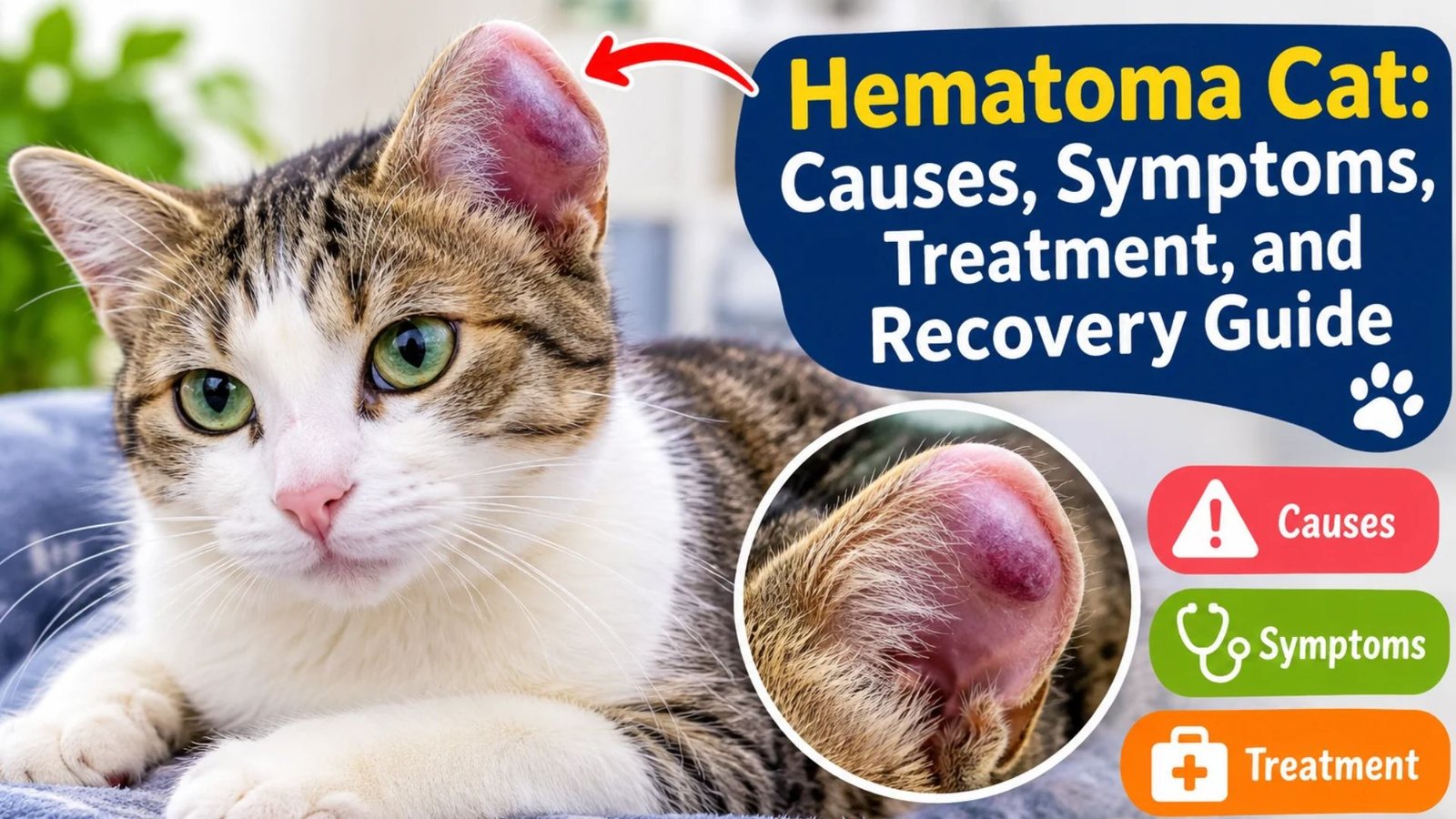
A swollen ear flap or unusual lump on a cat’s body can be worrying, especially when it appears suddenly. One possible explanation is a hematoma, a condition that occurs when blood escapes from damaged blood vessels and collects inside surrounding tissues.
A hematoma cat condition is particularly common in discussions about ear problems because cats can develop painful swellings inside their ear flaps. Repeated scratching, head shaking, ear infections, parasites, and injuries may contribute to this problem.
Although some hematomas are treatable, ignoring one can lead to discomfort, scarring, and permanent changes in the affected tissue. Understanding the warning signs and available veterinary treatments can help cat owners make informed decisions.
This guide explains the causes, symptoms, diagnosis, treatment options, recovery process, and prevention of hematomas in cats.
What Is a Hematoma Cat?
A hematoma is a collection of blood that escapes from damaged blood vessels and gathers outside the normal circulatory system, usually within body tissues. It can develop after an injury, repeated irritation, or damage to small blood vessels.
In cats, one of the best-known forms is an aural hematoma, also called a cat ear hematoma. It develops when blood collects between the skin and cartilage of the ear flap. The affected ear may become swollen, thick, warm, and uncomfortable.
Although ear hematomas receive the most attention, blood can also collect beneath the skin or inside other tissues following trauma or an injury.
A hematoma is not necessarily life-threatening, but its seriousness depends on its location, size, cause, and whether other injuries are present. A cat with a sudden swelling should be examined by a veterinarian to identify the problem and determine appropriate treatment.
ALSO READ:Common House Cat Breeds: 15 Popular Cats, Their Traits, Personalities, and Care Needs
How Does a Hematoma Develop in a Cat?
A hematoma develops when a blood vessel breaks and allows blood to escape into nearby tissue.
In the case of an ear hematoma, the process often begins with irritation inside the ear canal. A cat may repeatedly scratch its ear or shake its head to relieve itching. These movements can damage small blood vessels inside the ear flap.
As blood collects between the skin and cartilage, the ear begins to expand. The pressure can cause discomfort, which may encourage additional scratching and head shaking.
This can create a cycle:
- An ear problem causes itching or discomfort.
- The cat scratches or shakes its head repeatedly.
- Small blood vessels inside the ear flap rupture.
- Blood collects inside the ear tissue.
- The ear becomes swollen and painful.
The swelling may increase if the underlying irritation continues.
What Does a Cat Hematoma Look and Feel Like?
The appearance depends on where the hematoma develops.
An ear hematoma usually looks like a swollen pocket covering part or all of the ear flap. It may feel soft, spongy, thick, or fluid-filled. The affected ear can also become warmer than usual.
Other hematomas may appear as localized lumps beneath the skin. Their appearance can vary depending on how much blood has collected and how long the swelling has been present.
Common characteristics include:
- A sudden lump or swelling.
- Warmth around the affected area.
- Redness or skin discoloration.
- Tenderness when touched.
- Discomfort or sensitivity.
- Changes in the shape of the affected tissue.
Not every swollen lump is a hematoma. Abscesses, cysts, infections, insect bites, and other conditions can produce similar signs. A veterinary examination is necessary to distinguish between them.
Common Types of Hematomas in Cats
Hematomas can occur in different areas of a cat’s body. Their symptoms and treatment requirements depend on their location.
1. Aural hematoma: This develops inside the ear flap and is the most recognizable type in cats. It commonly results from repeated scratching or head shaking.
2. Subcutaneous hematoma: Blood collects beneath the skin, creating a swollen or bruised area. It may develop after a fall, bite, collision, or other physical injury.
3. Soft tissue hematoma: Blood accumulates within muscles or other soft tissues after trauma. Depending on the location, it may cause pain, swelling, and difficulty moving normally.
4. Internal hematoma: Blood collects within an internal tissue or body cavity. This may happen after significant trauma and can be serious, particularly if there is ongoing internal bleeding.
Internal bleeding cannot always be recognized from external appearance. Weakness, pale gums, rapid breathing, collapse, or severe lethargy after an injury require emergency veterinary attention.
Why Do Cats Develop Ear Hematomas?
Cats have delicate blood vessels within their ear flaps. Repeated scratching, vigorous head shaking, or direct injury can damage these vessels.
An ear hematoma often develops because another condition makes the ear itchy or uncomfortable.
For example, a cat with ear mites may repeatedly scratch its ears. A cat with an ear infection may shake its head frequently because of inflammation and irritation.
Over time, these movements can cause blood vessels to rupture.
The condition can affect cats of different ages and breeds. It is less common in cats than in dogs, but it still requires proper veterinary attention.
Main Causes of Hematoma Cat
Several factors may contribute to the development of a hematoma.
Ear infections: Bacterial or yeast infections can cause inflammation, itching, discharge, and discomfort. Repeated scratching may eventually damage blood vessels.
Ear mites: These tiny parasites can irritate the ear canal and encourage persistent scratching and head shaking.
Allergies: Environmental or food-related allergies may contribute to skin and ear inflammation. An itchy cat may repeatedly scratch its ears.
Physical injuries: Bites, scratches, falls, collisions, and blunt trauma can damage blood vessels and cause blood to collect in surrounding tissues.
Foreign objects: Small pieces of plant material or other objects inside the ear canal may cause irritation and repeated head shaking.
Skin conditions: Certain inflammatory or parasitic skin disorders can affect the ears and increase scratching.
Bleeding or clotting problems: Less commonly, an underlying disorder affecting normal blood clotting may contribute to unusual bleeding or hematoma formation.
Identifying the original cause is important because treating the swelling alone may not prevent another hematoma from developing.
Early Warning Signs and Symptoms
Recognizing the early signs can help cat owners arrange veterinary care before the condition becomes more complicated.
Look for the following symptoms:
- Sudden swelling in one ear or another part of the body.
- Frequent head shaking.
- Repeated scratching around the ears.
- Redness or warmth.
- Sensitivity when the ear is touched.
- A drooping or unusually thick ear flap.
- Unusual behavior or hiding.
- Reduced interest in normal activities.
- Ear discharge or an unpleasant smell.
Some cats may continue eating and behaving normally despite having a noticeable ear swelling. Therefore, normal appetite does not rule out a hematoma.
If the swelling appears suddenly, arrange a veterinary examination rather than waiting for it to become larger.
How to Recognize an Ear Hematoma
A swollen cat ear flap is one of the most recognizable signs of an aural hematoma.
The swelling may affect a small section of the ear or extend across most of the flap. In early stages, the ear often feels soft and spongy because it contains accumulated blood.
As the condition progresses, the ear may become thicker and less flexible.
You may notice:
- One ear looking larger than the other.
- A rounded or balloon-like appearance.
- A warm or sensitive ear flap.
- A drooping ear.
- Frequent head shaking.
- Scratching or rubbing against furniture.
Some other ear conditions can cause swelling without blood collecting inside the tissue. For this reason, owners should not assume that every swollen ear is an ear hematoma.
A veterinarian can examine the ear and confirm the diagnosis.
Can a Hematoma Affect Other Parts of a Cat’s Body?
Yes. Although ear hematomas are particularly well known, a cat can develop a collection of blood in other tissues following physical trauma.
A subcutaneous hematoma may appear as a lump beneath the skin. It can occur after a bite, fall, or collision.
A hematoma involving muscle tissue may cause localized pain, swelling, and difficulty using the affected limb.
Internal bleeding is a more serious concern. An injured cat may have bleeding inside the chest or abdomen without an obvious external wound.
Warning signs after an accident include:
- Pale or white gums.
- Rapid or difficult breathing.
- Extreme weakness.
- A swollen or painful abdomen.
- Collapse or difficulty standing.
- Unusual sleepiness or reduced responsiveness.
These symptoms require immediate emergency veterinary attention. Do not wait for an external lump to appear.
How Veterinarians Diagnose a Cat Hematoma
A veterinarian usually begins by asking about the cat’s medical history, recent injuries, ear problems, and changes in behavior.
For a suspected ear hematoma, the veterinarian will examine the affected ear and compare it with the healthy one.
Possible diagnostic procedures include:
Physical examination: The veterinarian checks the swelling, tenderness, temperature, and overall condition of the ear.
Ear examination: An otoscope may be used to examine the ear canal and look for inflammation, discharge, foreign material, or other abnormalities.
Ear swab and cytology: A sample of ear material may be examined under a microscope to identify mites, yeast, or bacteria.
Needle sampling: In selected cases, a veterinarian may collect a small sample from the swelling to confirm that it contains blood and distinguish it from other conditions.
Blood tests: These may be recommended when the veterinarian suspects a clotting problem, underlying illness, or significant injury.
For suspected internal hematomas, additional tests such as ultrasound, X-rays, and blood work may be necessary.
The diagnostic approach depends on the cat’s symptoms and the location of the suspected hematoma.
Best Veterinary Treatment Options
Cat hematoma treatment depends on the size of the swelling, its location, the duration of the condition, and the cat’s general health.
The veterinarian may recommend one or more of the following approaches.
Needle drainage: A veterinarian may use a sterile needle and syringe to remove accumulated blood. This can provide temporary relief, especially in selected cases, but the pocket may refill.
Drain placement: A small drainage tube may be placed to allow fluid to escape over time. This can help prevent blood from accumulating again.
Surgical drainage: A surgical procedure may be recommended for larger or recurring ear hematomas. The veterinarian opens the affected area, removes the accumulated blood, and uses stitches to keep the tissue layers together.
Pain relief and anti-inflammatory medication: Appropriate veterinary medication can help manage discomfort and inflammation.
Treatment of the underlying problem: Ear infections, mites, allergies, and other causes of irritation must also be addressed.
The best treatment is not the same for every cat. A veterinarian will select an approach based on the individual animal’s needs.
Does a Cat Hematoma Require Surgery?
Not every hematoma requires surgery.
Small and uncomplicated ear hematomas may sometimes be managed with medical treatment, monitoring, or drainage. However, larger or persistent swellings may need surgical correction.
During surgery, the veterinarian usually makes an incision in the ear flap and removes accumulated blood. Stitches are then placed to hold the skin against the underlying cartilage and reduce the space where blood could collect.
A drain or protective bandage may also be used when appropriate.
Surgery aims to:
- Remove accumulated blood.
- Reduce the likelihood of refilling.
- Allow the ear tissues to heal.
- Minimize permanent deformity.
- Improve comfort.
Surgical treatment may be particularly helpful when a hematoma repeatedly returns after drainage.
Can a Hematoma Heal Without Treatment?
Some small hematomas can gradually shrink as the body absorbs the accumulated blood. However, natural healing does not necessarily mean that the affected tissue will return to its original appearance.
An untreated ear hematoma may take weeks or even months to resolve. During this time, scar tissue can develop and change the shape of the ear.
The ear may become thick, wrinkled, or permanently deformed.
Even when the swelling begins to disappear, the original cause may remain. An untreated ear infection or mite infestation can continue to produce discomfort and further injury.
Therefore, owners should not rely on natural healing without veterinary advice.
What Happens If a Hematoma Is Ignored?
Ignoring a hematoma can result in unnecessary pain and complications.
Possible problems include:
- Persistent swelling and discomfort.
- Scar tissue formation.
- Permanent thickening of the ear flap.
- A distorted cauliflower-like ear.
- Reduced flexibility of the ear.
- Repeated hematoma formation.
- Continued irritation from an untreated infection or parasite problem.
In some cases, severe swelling and tissue damage may affect the ear canal.
A hematoma caused by significant physical trauma can be even more concerning because other injuries may be present.
Early veterinary assessment gives the cat a better opportunity for appropriate treatment and reduces the risk of avoidable complications.
Cat Hematoma Recovery: What to Expect
Recovery depends on the treatment method and whether the underlying cause has been controlled.
After surgical treatment, a cat may need several days of rest and careful wound monitoring. Some cats wear an Elizabethan collar to prevent scratching and rubbing.
The veterinarian may prescribe pain medication or other treatments depending on the procedure and the cat’s condition.
During recovery, the ear may remain slightly swollen or sensitive for a period. This does not automatically indicate treatment failure, but worsening swelling, significant bleeding, or increasing pain should be reported.
Follow-up appointments allow the veterinarian to check the healing tissue, remove stitches or drains when appropriate, and assess whether the original ear problem has improved.
How Long Does Recovery Usually Take?
There is no single recovery timeline for every hematoma.
Some cats recover relatively quickly after appropriate treatment, while others need additional visits or a longer healing period.
For example:
- Small hematomas may improve over several days or weeks.
- Surgical recovery commonly involves follow-up over the following two to three weeks.
- More complicated cases may require additional treatment.
- Untreated hematomas can take several weeks or months to resolve and may leave permanent scarring.
The timeline also depends on the cat’s age, overall health, the severity of the swelling, and whether complications develop.
Your veterinarian can provide a more realistic estimate after examining the affected area.
Essential Home Care During Recovery
Good home care helps protect the affected tissue and supports healing.
Follow these practical guidelines:
Give prescribed medication: Administer all medication according to the veterinarian’s instructions. Do not stop treatment early without professional advice.
Use an Elizabethan collar: If recommended, keep the collar on for the instructed period to prevent scratching and further injury.
Keep the area clean: Follow the veterinarian’s wound-cleaning instructions. Avoid applying household products, creams, or cleaning solutions without approval.
Prevent rough activity: Give your cat a comfortable, quiet place to rest while the ear heals.
Monitor the swelling: Watch for changes in size, redness, warmth, and tenderness.
Check the wound: Look for unusual discharge, unpleasant smells, excessive bleeding, or opening of surgical stitches.
Monitor general behavior: Keep an eye on appetite, drinking, energy, and normal movement.
Attend follow-up visits: Do not skip appointments, even if the swelling appears to have improved.
Never squeeze, puncture, or attempt to drain a hematoma at home. Doing so can introduce infection, cause additional bleeding, and damage delicate tissue.
Never give human painkillers such as ibuprofen, acetaminophen, or aspirin unless a veterinarian specifically directs you. Some human medications can be extremely dangerous to cats.
Can a Cat Hematoma Return After Treatment?
Yes, a hematoma can return, particularly when the original cause has not been properly treated.
For example, a cat may continue scratching because of an ear infection even after the blood has been drained. Continued irritation can damage blood vessels again.
Recurrence is more likely when the underlying condition remains active or when the hematoma has not been adequately managed.
To reduce this risk, veterinarians may recommend:
- Completing treatment for ear infections.
- Treating ear mites when present.
- Managing allergies or skin conditions.
- Preventing repeated scratching and head shaking.
- Attending follow-up examinations.
- Following all post-surgical instructions.
Proper treatment of the original problem is just as important as managing the swelling itself.
Practical Ways to Reduce the Risk of Hematomas
Not every hematoma can be prevented, but responsible ear care and injury prevention can reduce some common risks.
Check your cat’s ears regularly: Look for redness, unusual discharge, swelling, unpleasant smells, and excessive wax.
Address itching early: Persistent scratching should not be ignored. Ask your veterinarian to investigate the cause.
Keep parasite prevention up to date: Use veterinarian-approved products appropriate for your cat.
Treat ear infections promptly: Follow the complete treatment plan rather than stopping medication when symptoms improve.
Avoid inserting objects into the ears: Cotton buds and other objects can injure delicate ear tissues.
Reduce injury risks: Provide a safe home environment and supervise outdoor activities where possible.
Maintain routine veterinary care: Regular examinations can help identify ear and skin problems before they become more serious.
Prevention focuses mainly on reducing the irritation, infection, and trauma that can lead to blood vessel damage.
When Should You Contact a Veterinarian?
Contact your veterinarian as soon as you notice sudden swelling in your cat’s ear flap or an unexplained lump that may contain blood.
Do not wait for the swelling to become larger or painful.
Arrange prompt veterinary attention if your cat has:
- A swollen or balloon-like ear.
- Repeated head shaking.
- Persistent ear scratching.
- Ear discharge or an unpleasant smell.
- Pain when the affected area is touched.
- A new lump following an injury.
Seek emergency veterinary care if your cat experiences collapse, pale gums, difficulty breathing, severe weakness, uncontrolled bleeding, or other signs of serious internal injury.
Conclusion
A hematoma cat condition can cause significant discomfort, particularly when blood collects inside the ear flap. Repeated scratching, head shaking, ear infections, mites, allergies, and physical injuries are among the factors that may contribute to its development.
Although some small hematomas may resolve naturally, waiting without veterinary guidance can lead to scarring, permanent ear deformity, and continued discomfort. Treatment may involve drainage, medication, surgical correction, and management of the underlying cause.
Cat owners should watch for sudden swelling, warmth, redness, head shaking, and sensitivity around the affected area. Never attempt to puncture or drain a hematoma at home.
The safest approach is to arrange a veterinary examination early, follow the recommended treatment plan, and provide careful support throughout recovery. With appropriate professional care, many cats can recover comfortably and avoid further complications.
ALSO READ:Why Do Cats Meow So Much? Common Reasons, What Different Meows Mean, and How to Help
FAQs
1. What is a hematoma cat condition?
A hematoma is a collection of blood outside blood vessels within body tissues. In cats, it commonly affects the ear flap, causing a swollen, warm, and sometimes painful area.
2. What causes ear hematomas in cats?
Ear hematomas commonly develop when repeated scratching or head shaking damages small blood vessels. Ear mites, infections, allergies, and physical injuries may contribute to the problem.
3. Can a cat hematoma disappear naturally?
Some small hematomas may be absorbed by the body, but healing can take weeks or months. Ear tissue may become permanently thickened or deformed, so veterinary assessment is recommended.
4. How long does a cat need to recover from a hematoma?
Recovery varies depending on the size, location, and treatment. Some cats improve within a few weeks, while complicated cases may require longer treatment and follow-up.
5. Can a cat’s ear hematoma come back after treatment?
Yes. Recurrence is possible, especially if an underlying infection, allergy, or parasite problem remains untreated. Addressing the original cause helps reduce the risk.
Related Post

Cat Groomers in My Area: How to Find the Best Local Groomer
Finding reliable Cat Groomers in My Area can make a big difference to your cat’s [...]
Lotus Tree Cat Tower: Features, Benefits, Design, and How to Choose the Right One for Your Cat
Cats love climbing, scratching, exploring, and finding comfortable places where they can relax. For indoor [...]